





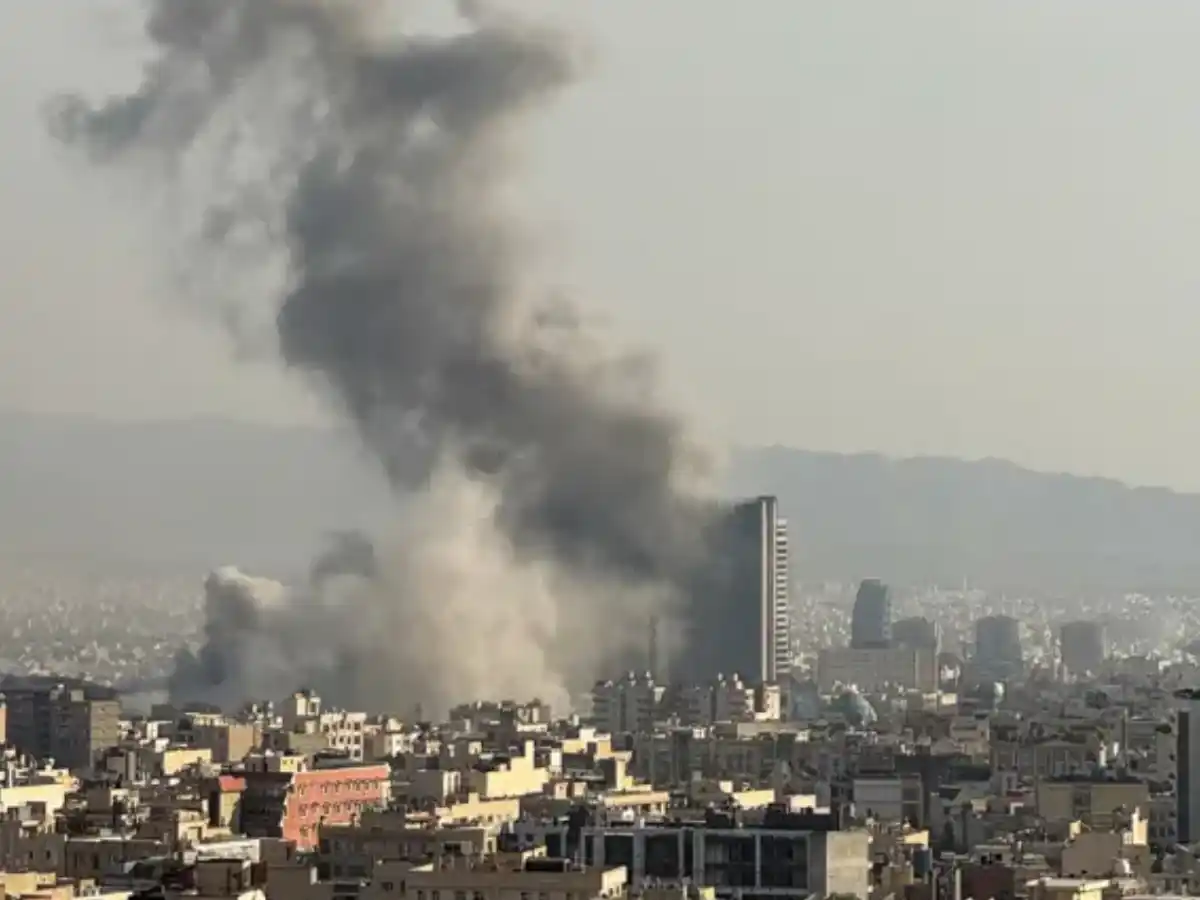
Explosions tore through Tehran and Beirut on Tuesday, sending global financial markets tumbling amid fears of prolonged disruption to energy supplies caused by the United States-Israel air campaign against Iran, as reported by international media.
Iranian Drones Strike US Embassies in Saudi Arabia
Iranian drones targeted the U.S. embassy in Saudi Arabia, causing minor damage and a fire, following a previous attack on the U.S. mission in Kuwait City.
Visit Times of Karachi website for the latest news-related content
In response, the United States closed multiple embassies across the Middle East and ordered non-essential personnel and their families to evacuate.
Deadly Air Strikes and Regional Escalation
The campaign began with US-Israeli air strikes, including the killing of Iranian Supreme Leader Ayatollah Ali Khamenei on the first day, reportedly marking a historic first of a national leader killed by enemy air forces.
Israel has accelerated its campaign through Tehran, striking the state broadcaster IRIB headquarters and targeting Iranian military installations. Residents have fled highways and cities to avoid ongoing bombardment.
The war has now spread to Lebanon, where Hezbollah fired on Israel, prompting Israeli air strikes and reinforcement of southern ground positions. Thick smoke blanketed Beirut, and dozens were reportedly killed.
Israel-Iran war: Iran vows retaliation after death of Khamenei
Iran cited a death toll of 787 from the Red Crescent, including civilians in Minab, where many mourned girls killed in a school bombing. The UN human rights office demanded a probe into the attack, calling it “absolutely horrific.”
Global Market Impact
Global energy markets reacted sharply. Crude oil prices rose 15% in two days, while European wholesale natural gas surged by 40%.
European stocks fell, including the STOXX 600, while South Korean shares dropped over 7%. U.S. stock futures indicated a downward trend as concerns over energy supply and inflation escalated.
The conflict also disrupted shipping through the Strait of Hormuz, forcing Qatar to halt LNG production and sending tanker hire costs to record highs above $400,000 per day.
Leaders’ Statements and War Timeline
Israeli Prime Minister Benjamin Netanyahu said the war “is not going to take years,” while US President Donald Trump suggested it could last four to five weeks.
Both leaders avoided firm deadlines, leaving the conflict open-ended.
U.S. Secretary of State Marco Rubio said Washington acted preemptively to limit casualties, anticipating Iranian retaliation if Israel struck first.
Follow the Times of Karachi channel on WhatsApp
In Israel, air raid sirens repeatedly sent millions into bomb shelters in Tel Aviv, and buildings shook as missile defenses intercepted Iranian attacks.
Airports across the Middle East, key global transport hubs, have been shut, disrupting international air travel.
The US-Israel-Iran conflict, which began with targeted air strikes, has now expanded regionally, involving multiple state and non-state actors.
The crisis is affecting global energy flows and markets, and threatens further escalation with no clear end in sight. Civilian casualties and infrastructure damage continue to mount in Tehran, Beirut, and other affected areas.