






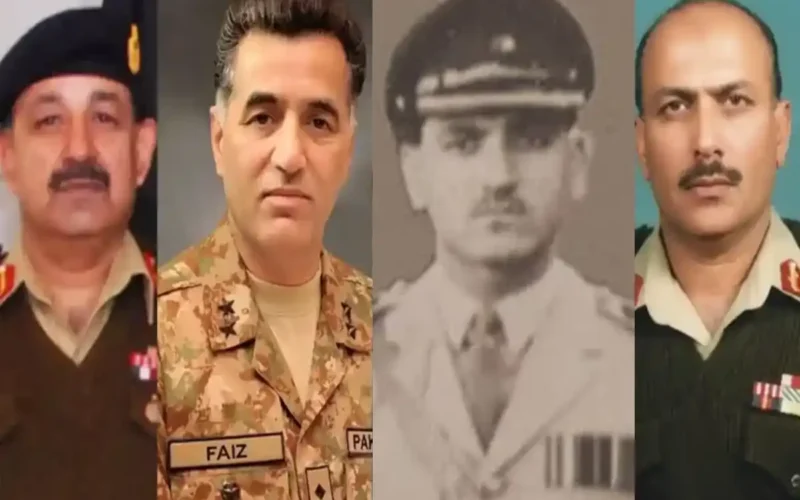
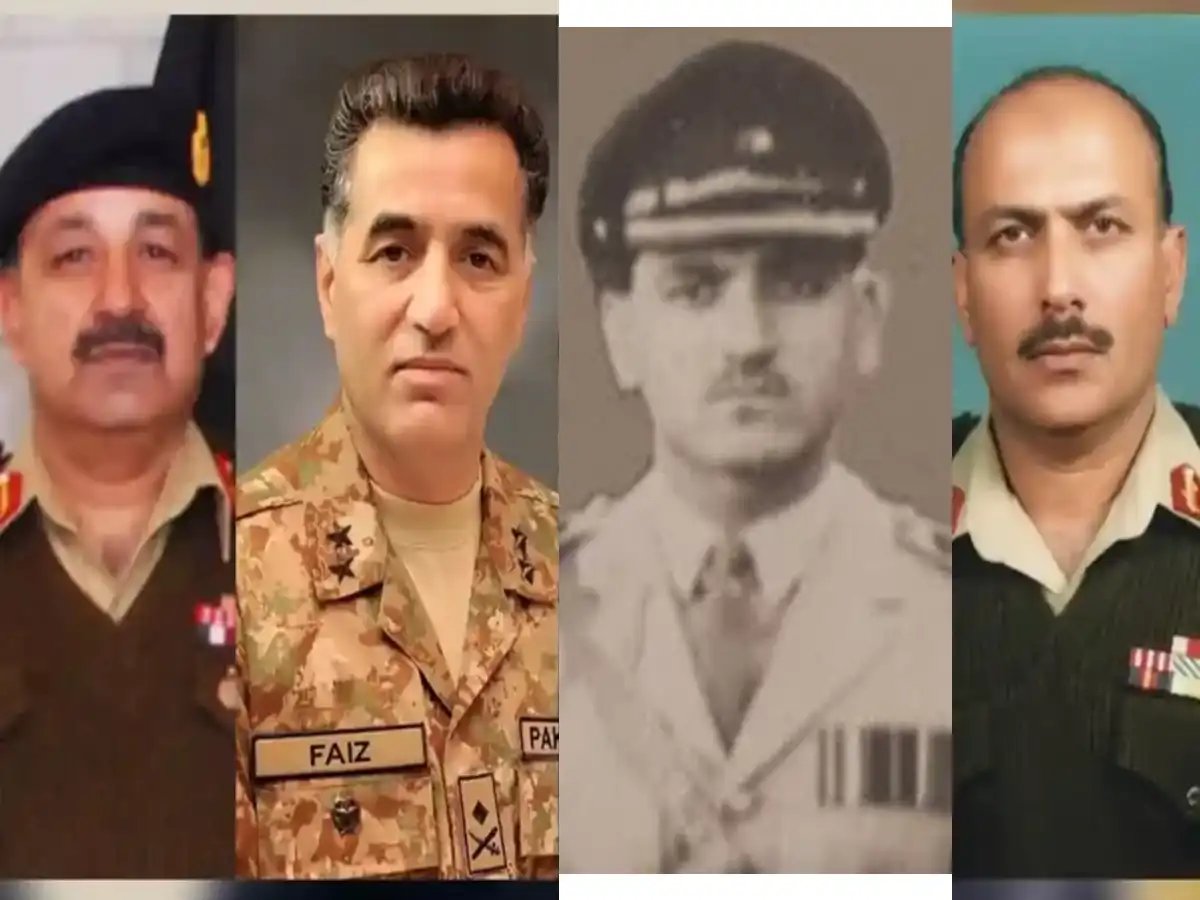
Former ISI chief General Faiz Hameed has made headlines following his 14-year sentence. However, he is not the first military officer to face institutional accountability for alleged misconduct.
The Inter-Services Public Relations (ISPR) confirmed that proceedings against the retired lieutenant general began on August 12, 2024, under the Pakistan Army Act, with the verdict delivered on December 11, 2025.
According to military statement, General Faiz Hameed was charged with four offenses: involvement in political activities, breach of the Official Secrets Act, abuse of authority and government assets, and causing unjust losses to individuals.
Visit Times of Karachi website for the latest news-related content
The trial featured extensive evidence, multiple witness statements, and a lengthy legal process spanning several months, which ultimately demonstrated the accused’s participation in activities detrimental to national security.
The military court concluded that the former officer’s conduct – including his political involvement and misuse of classified information – amounted to serious violations, justifying strict disciplinary measures under the Army Act.
While this case has drawn significant attention, military history includes other instances where officers have been held accountable through court-martial proceedings.
Below is a look at some of the most notable cases involving senior army officers in the past.
NLC Scam – Lt. Gen. (retd) Khalid Munir Khan and Muhammad Afzal Muzaffar
In 2009, the Public Accounts Committee (PAC) initiated an investigation following a report from the National Logistics Cell (NLC) that highlighted losses amounting to Rs 1.8 billion between 2004 and 2008.
These losses stemmed from high-interest loans taken from commercial banks and Rs 4 billion invested by pensioners in the stock market through certain companies, which was deemed unlawful.
Under the direction of the PAC, the Planning Commission conducted an inquiry that uncovered financial mismanagement, lack of transparency, and violations of rules within the NLC, mainly attributed to poor decisions made by the leadership.
The investigation pointed to the involvement of former Quartermasters Lt Gen (retd) Khalid Munir Khan and Lt Gen (retd) M Afzal Muzaffar, former Director General of NLC Maj Gen Khalid Zaheer Akhtar (retired), along with two civilians, Najeeb-ur-Rehman and Saeed-ur-Rehman. The Quartermaster General holds oversight responsibilities for the NLC.
Based on the inquiry’s recommendations, then Army Chief General Ashfaq Parvez Kayani opted to proceed with a military trial under Section 94 of the Army Act, bypassing referral to the National Accountability Bureau (NAB).
An Army Court of Inquiry was established in November 2010, delivering preliminary findings in February 2011. Subsequently, General Kayani ordered a formal military trial to ensure due process.
By 2015, the investigation concluded that two retired generals and a civilian had made improper investment choices that violated NLC regulations.
Disciplinary actions followed: Khalid Zaheer was “dismissed from service”, while Afzal Muzaffar received “severe chastity (recorded)”.
Spying Charges – Lt. Gen (retd) Javed Iqbal
Lt. Gen (retd) Javed Iqbal was found guilty by the Field General Court Martial (FGCM) on May 30, 2019, on charges of spying and sharing sensitive information with foreign agencies, which was deemed harmful to national security.
In May 2021, the Appellate Authority reduced his original 14-year sentence to seven years. Later, former Army Chief General Qamar Javed Bajwa further shortened the sentence to just two and a half years before leaving his post at GHQ.
READ: Ex-ISI General Faiz Hameed sentenced to 14 years after 15-month trial
As a result, General (retd) Javed Iqbal was scheduled for release on May 29, 2024. However, under the tenure of the current Army Chief, General Asim Munir, his sentence was fully commuted, allowing for his early release.
Attempted Coup – Major General Zaheer-ul-Islam Abbasi and Others
On September 26, 1995, Major General Zaheer-ul-Islam Abbasi, Brigadier Mustansar Billah, Colonel Muhammad Azad Minhas, Colonel Inayatullah Khan, along with 38 other military officers, were arrested for allegedly planning to storm the Corps Commanders’ meeting at General Headquarters Rawalpindi scheduled for September 30.
The plot reportedly included plans to assassinate then-Prime Minister Benazir Bhutto, Army Chief General Waheed Kakar, senior cabinet members, and other military leaders.
The conspirators intended to establish an Islamic caliphate, with Major General Abbasi assuming the role of Ameer-ul-Momineen.
The conspiracy came to light after Harkat-ul-Jihad-ul-Islami chief Qari Saifullah Akhtar, despite being involved, cooperated with the government.
Based on his testimony, the Field General Court Martial (FGCM) sentenced Major General (retd) Zaheer-ul-Islam Abbasi to seven years in prison and confiscated his weapons and army uniform.
Brigadier Mustansar Billah received a 14-year prison term for his role in the coup attempt.
In September 1996, Colonel Muhammad Azad Minhas and Colonel Inayatullah Khan were also court-martialed for their involvement in the conspiracy, with the FGCM handing down four-year prison sentences to both officers.
Mutiny and terrorist links – Brigadier (retd) Ali Khan
In 2011, Brigadier Ali Khan was taken into custody for alleged links with the banned organization Hizb ut-Tahrir.
Four other officers – Major Inayat Aziz, Major Iftikhar, Major Sohail Akbar, and Major Jawad Baseer – were also implicated and convicted in connection with the case.
The Field General Court Martial (FGCM) sentenced Brigadier Ali Khan to five years of rigorous imprisonment. Major Sohail Akbar received a three-year sentence, Major Jawad Baseer two years, Major Inayat Aziz one year, and Major Iftikhar six months of rigorous imprisonment.
Follow the Times of Karachi channel on WhatsApp
Brigadier Ali Khan faced additional charges of plotting to overthrow the government, inciting mutiny within the army, and involvement in plans targeting GHQ. After serving his full five-year term, he was released in 2016.
The prosecution called five military officers as witnesses during the seven-month trial, who testified that Brigadier Ali Khan had actively incited mutiny against the civilian leadership.
Dismissal from service
There have been cases where senior military officers were removed from service through administrative action rather than a formal court-martial.
For instance, General (retd) Ziauddin Butt, who was appointed army chief by then-Prime Minister Nawaz Sharif in October 1999, spent two years in prison.
In an interview with a local news outlet, he claimed to have received a handwritten order dismissing him from the army under Section 16 of the Pakistan Army Act, without undergoing a court-martial.
Similarly, in 2016, during General Raheel Sharif’s tenure, six officers were dismissed for corruption, including serving officers Lt. Gen. Obaidullah Khattak, then Inspector General Arms, and Major General Ijaz Shahid.
Earlier, in 2015, several generals implicated in the NLC scam were also dismissed from service following disciplinary proceedings.
‘Court martial not held despite Supreme Court order’
While the army has held many senior officers accountable for misconduct, there have also been instances where it did not act despite Supreme Court orders.
In 1996, Asghar Khan filed a human rights petition in the Supreme Court, alleging that the ISI had distributed Rs 140 million to certain politicians. The accused included former army chief Aslam Beg and former ISI Director General Lt. Gen (retd) Asad Durrani.
Durrani confirmed his involvement in an affidavit, outlining his role, naming others, and explaining how the scheme was implemented.
On October 19, 2012, the Supreme Court issued a landmark ruling directing the Ministry of Defence to take action against the senior officers implicated in the funds distribution.
By 2019, the Ministry reported to the Supreme Court that a Court of Inquiry had been formed, recording statements from six witnesses while searching for additional testimonies.
In 2018, another Court of Inquiry was established to examine Asad Durrani’s involvement and verify the contents of his book, The Spy Chronicles: RAW, ISI, and the Illusion of Peace.
Three years later, Durrani requested removal from the no-fly list to travel abroad. However, the Ministry of Defence alleged that he had maintained links with anti-state elements, particularly India’s intelligence agency RAW, since 2008.
However, the Islamabad High Court removed Asad Durrani’s name from the Exit Control List (ECL), with the judge remarking that ‘as per the record, he is not currently under investigation in any case’.