





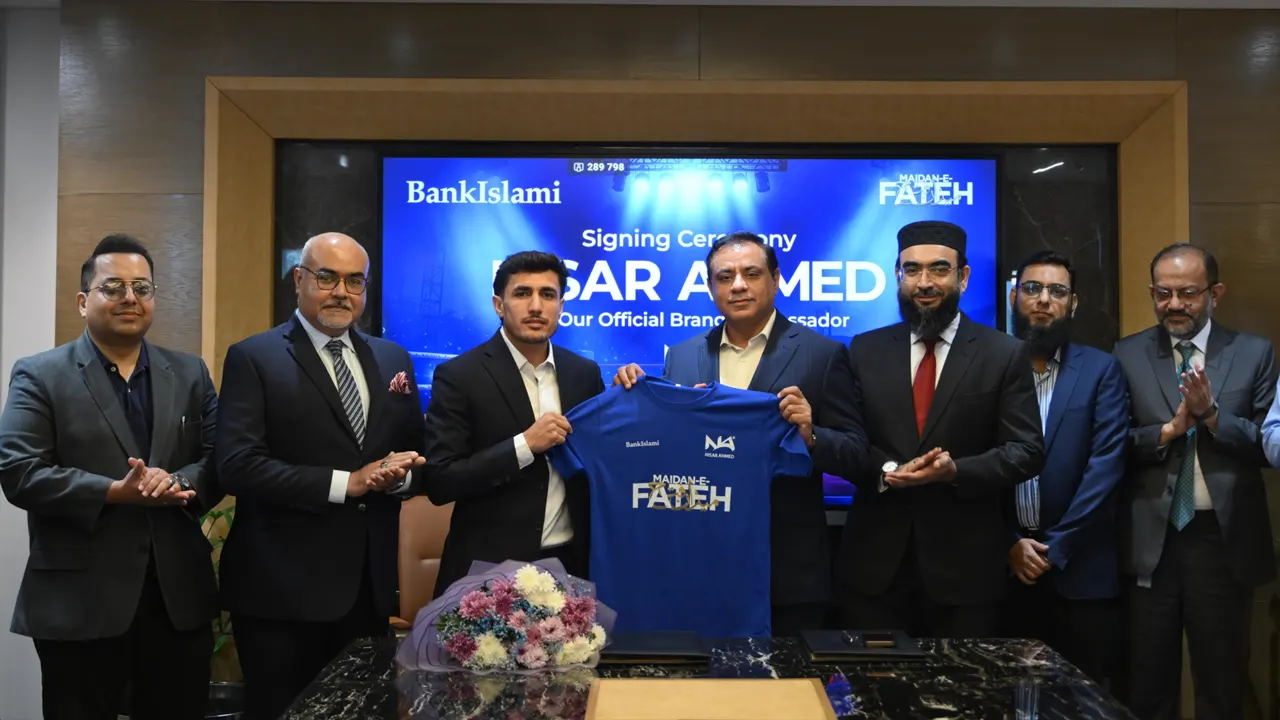
BankIslami, one of Pakistan’s fastest-growing Islamic banks, has signed Nisar Ahmed, the WMF Pro-Am Muay Thai World Champion, as its official brand ambassador. The partnership was formalised at a signing ceremony held at the Bank’s headquarters in Karachi, attended by the Bank’s senior leadership.
Follow Times of Karachi on Google News and add as a preferred Source on Google
Hailing from Killa Abdullah, Balochistan, Nisar Ahmed built his career through years of training and competition before moving on to the international circuit. In 2024, he became the first Pakistani to win the World Muay Federation Pro-Amateur World Muay Thai title in Bangkok. He has also won four gold medals at the National Kickboxing Championships, along with several international and national honours.
The partnership reflects BankIslami’s commitment to supporting and promoting emerging athletes at every stage of their journey. As brand ambassador, Nisar will represent the Bank in its campaigns, community initiatives and youth engagement activities nationwide.
“Pakistan has immense talent coming from every corner of the country, and Nisar’s rise from Killa Abdullah to world champion is a true reflection of it,” said Imran H Shaikh, President & Chief Executive Officer of BankIslami. “We are honoured to play a small part in his journey and look forward to supporting him as he continues to fly Pakistan’s flag around the world,” he added.
“Representing Pakistan on the international stage is an honour, and I carry that responsibility with dignity into every fight. Pakistan has so much talent in combat sports waiting for the right opportunity, and BankIslami’s support means a great deal to me and to every young fighter working towards their goals,” said Nisar Ahmed. “I look forward to working with the Bank to bring more young people into the sport,” he added.
The partnership adds to BankIslami’s ongoing work to support youth, sport and community development across Pakistan, in line with its mission of Saving Humanity from Riba.