





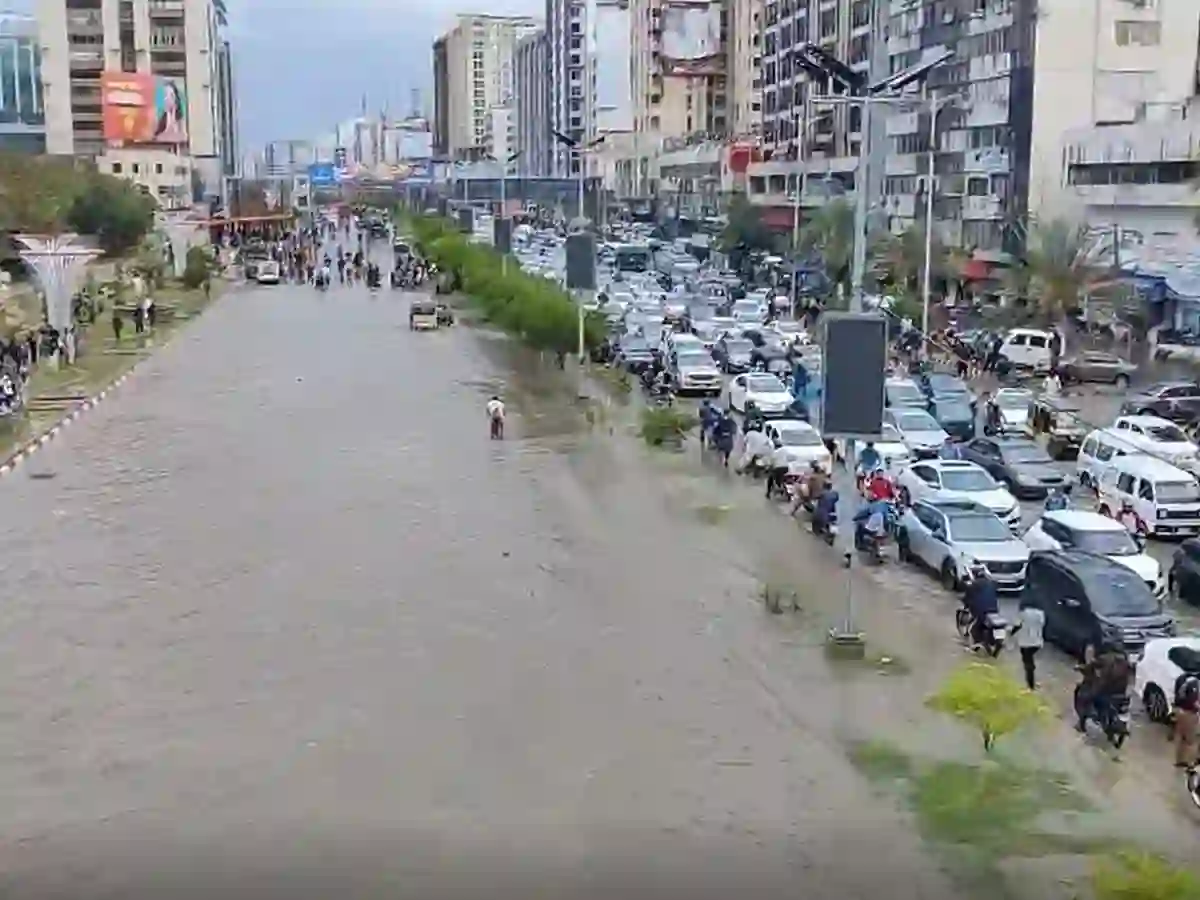
Karachi faced widespread water accumulation and severe traffic congestion on Thursday, April 2, following heavy rainfall across the city.
Commuters struggled to navigate flooded streets as traffic slowed in multiple areas.
Rain showers were reported in Surjani Town and Gulshan-e-Maymar, while thunderstorms hit the Airport, Malir, and nearby regions.
Visit Times of Karachi website for the latest news-related content
Intermittent rain continued in Defence, Clifton, and Saddar.
Low-lying roads on Sharah-e-Faisal, Kashmir Road, Orangi Town, North Nazimabad, and Saddar experienced significant waterlogging, affecting daily traffic.
North Karachi and Power House Chowrangi also reported strong showers accompanied by gusty winds.
Mayor Karachi Inspects Rain Situation
Mayor Karachi Murtaza Wahab visited Sharah-e-Faisal Nursery to assess the impact of heavy rainfall across the city.
Speaking to the media, he described the rain as “very intense” but assured that water is expected to recede within an hour and a half.
The mayor added that rainwater flows through the city’s drains, which are currently functioning properly, and officials have conducted inspections to ensure smooth drainage.
He also appealed to citizens to avoid leaving their homes or offices unless absolutely necessary, emphasizing public safety during the ongoing weather conditions.
The Pakistan Meteorological Department (PMD) recorded winds near the airport reaching up to 47 km/h. Temperatures in the city ranged between 23.5°C and 27°C, with humidity levels around 83 percent.
کراچی میں بارش کے پیش نظر حکومت سندھ نے شہریوں سے احتیاط برتنے کی اپیل کی ہے اور تمام متعلقہ اداروں کو ہائی الرٹ کر دیا گیا ہے، پیشگی انتظامات کے تحت ضروری عملے کی چھٹیاں منسوخ کر دی گئی ہیں اور افسران کو فیلڈ میں موجود رہنے کی ہدایت دی گئی ہے۔ نشیبی علاقوں میں برساتی پانی کی… pic.twitter.com/hLNsZM1Y0b
— Sindh Information Department (@sindhinfodepart) April 2, 2026
Senior Minister Sharjeel Memon stated that additional de-watering pumps had been installed to speed up the drainage of rainwater from flood-prone areas.
Staff have been deployed to monitor key congestion points, and more pumps are ready to prevent obstructions in water flow.
The minister urged residents to take precautions, avoid unnecessary travel, and contact authorities immediately in emergencies.
READ: Karachi faces gas supply cuts as RLNG shortage deepens
“The protection of citizens is the government’s foremost responsibility, and all available resources are being mobilised to manage any adverse situation effectively,” Memon added.
According to the PMD, rainfall measurements on April 2 included 20.5 mm on the M-9 Motorway, 12.6 mm in Surjani Town, 7.2 mm in Gulshan-e-Maymar, 6.2 mm at Jinnah Terminal, 6 mm in Kemari, and 5 mm in Defence.
Meteorological officials noted that the highest April rainfall in Karachi was recorded in 1985, with 37 mm falling on April 2 that year.
The changing weather patterns have brought more rainfall to the city in recent years, with no rainfall recorded in April 2025.
Previously, western wind systems mostly affected northern Pakistan, but now certain conditions are creating rainfall in southern areas, including Karachi.
K-Electric has advised residents to exercise caution during the rain, especially when using electrical appliances.
Unsafe use of devices, water pumps, or damaged electrical connections could result in accidents.
Residents can report electricity-related emergencies by contacting the 118 helpline or using K-Electric’s Live app and WhatsApp service.
Some areas may experience temporary power suspensions, which will be restored once conditions are safe.
In response to such emergencies, the Sindh government has approved a Rs30.8 billion plan to modernize emergency services across the province.
Under Chief Minister Murad Ali Shah’s guidance, departments including Rescue 1122, Civil Defence, and emergency health services will be integrated into a unified authority.
The project will include 100 fire trucks, drones, aerial ladders, firebikes, and all-terrain vehicles.
Fire safety audits of 3,340 buildings have been conducted, with compliance improving to 43 percent and high-risk buildings reduced from 33 percent to 22 percent.
Several dangerous structures have also been sealed.
Follow the Times of Karachi channel on WhatsApp
The CM emphasized that protecting lives and property is the top priority, and the upgraded emergency system will improve coordination, response times, and citizen safety.