





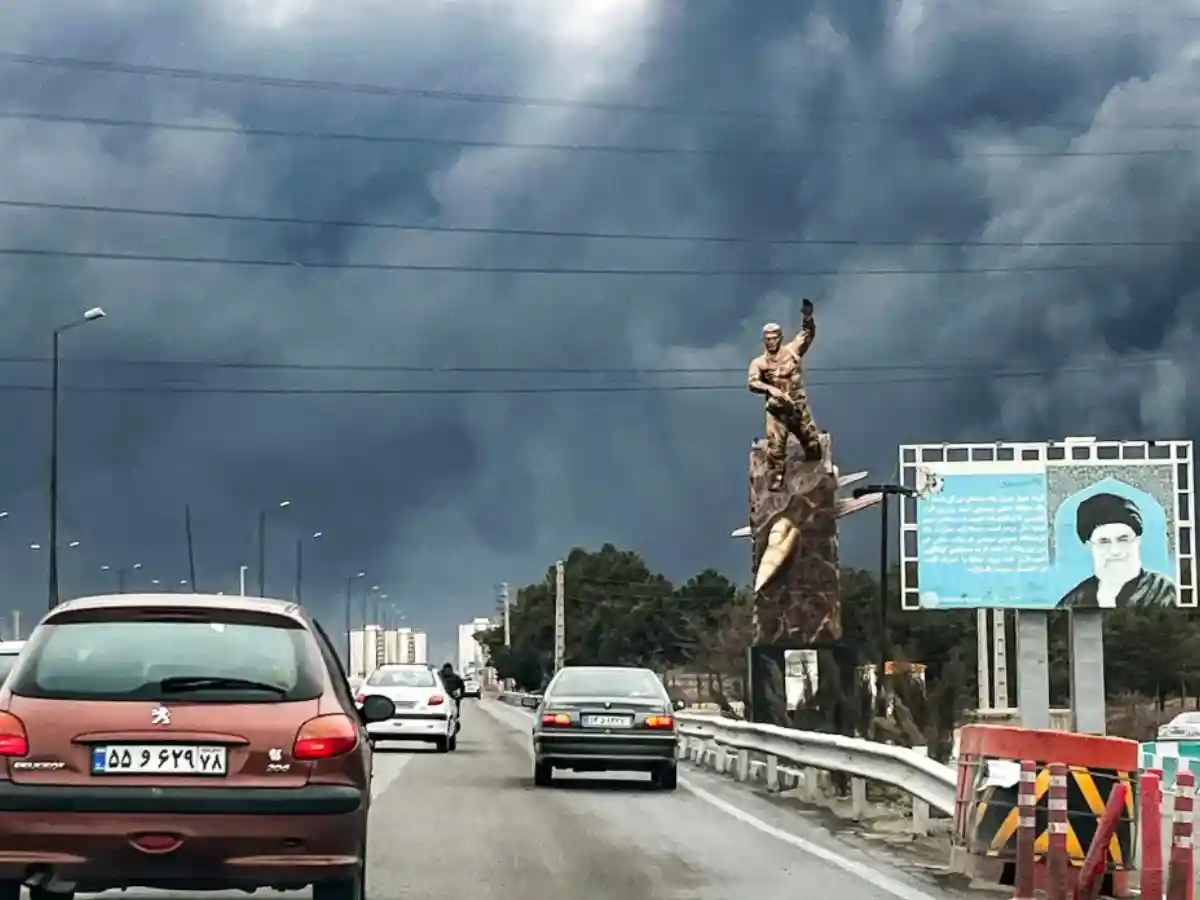
The Pakistan Meteorological Department (PMD) has warned that pollution from recent US and Israeli airstrikes on Iran’s oil facilities could affect air quality in western Pakistan.
The strikes on Tehran’s refineries and fuel depots caused thick black smoke and black, oily rain over the Iranian capital.
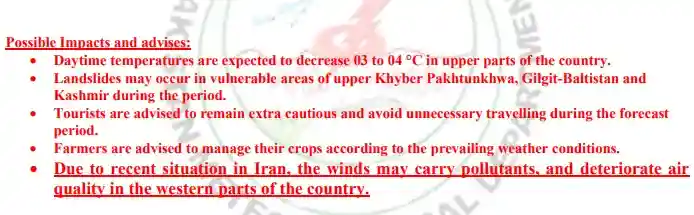
A PMD press release on March 9, 2026, stated that winds may carry pollutants toward Pakistan, potentially deteriorating air quality in western provinces.
Visit Times of Karachi website for the latest news-related content
Tehran’s environment has become heavily toxic after the attacks, with the Iranian Red Crescent Society warning that released hydrocarbons, sulfur, and nitrogen oxides could cause lung damage and chemical burns.
CNN correspondent Frederik Pleitgen described the scene at Tehran’s Shahran oil depot as “apocalyptic.”
Weather Forecast for Pakistan
The PMD predicted that rain and thunderstorms are likely in upper parts of the country due to an approaching westerly wave.
Moderate rainfall with wind and thunderstorms is expected in Khyber Pakhtunkhwa (Dir, Chitral, Swat, Kohistan, Shangla, Battagram, Buner, Malakand, Mansehra, Abbottabad, Haripur), Gilgit-Baltistan, and Azad Jammu & Kashmir from March 9 to 12.
Light rain and thunderstorms are also expected in Khyber, Mohmand, Peshawar, Swabi, Mardan, Charsadda, Nowshera, Bajaur, Bannu, Waziristan, Orakzai, Kohat, Hangu, and Mianwali on March 10–11.
Who is Mojtaba Khamenei? Key Facts About Iran’s New Supreme Leader
The Potohar region, Islamabad, Murree, and Galliyat may experience rain with occasional hailstorms. Temperatures in upper parts are likely to drop by 3–4°C.
Landslides are possible in vulnerable areas of KP, GB, and AJK. Tourists are advised to avoid unnecessary travel, and farmers are urged to manage crops carefully.
Background of the Story
Iran, Pakistan’s western neighbor, has been at war with the United States and Israel since February 28, 2026, when airstrikes reportedly killed Supreme Leader Ayatollah Ali Khamenei.
Follow the Times of Karachi channel on WhatsApp
Large-scale attacks on oil infrastructure have led to environmental and health concerns, with regional meteorological agencies closely monitoring potential cross-border impacts.