





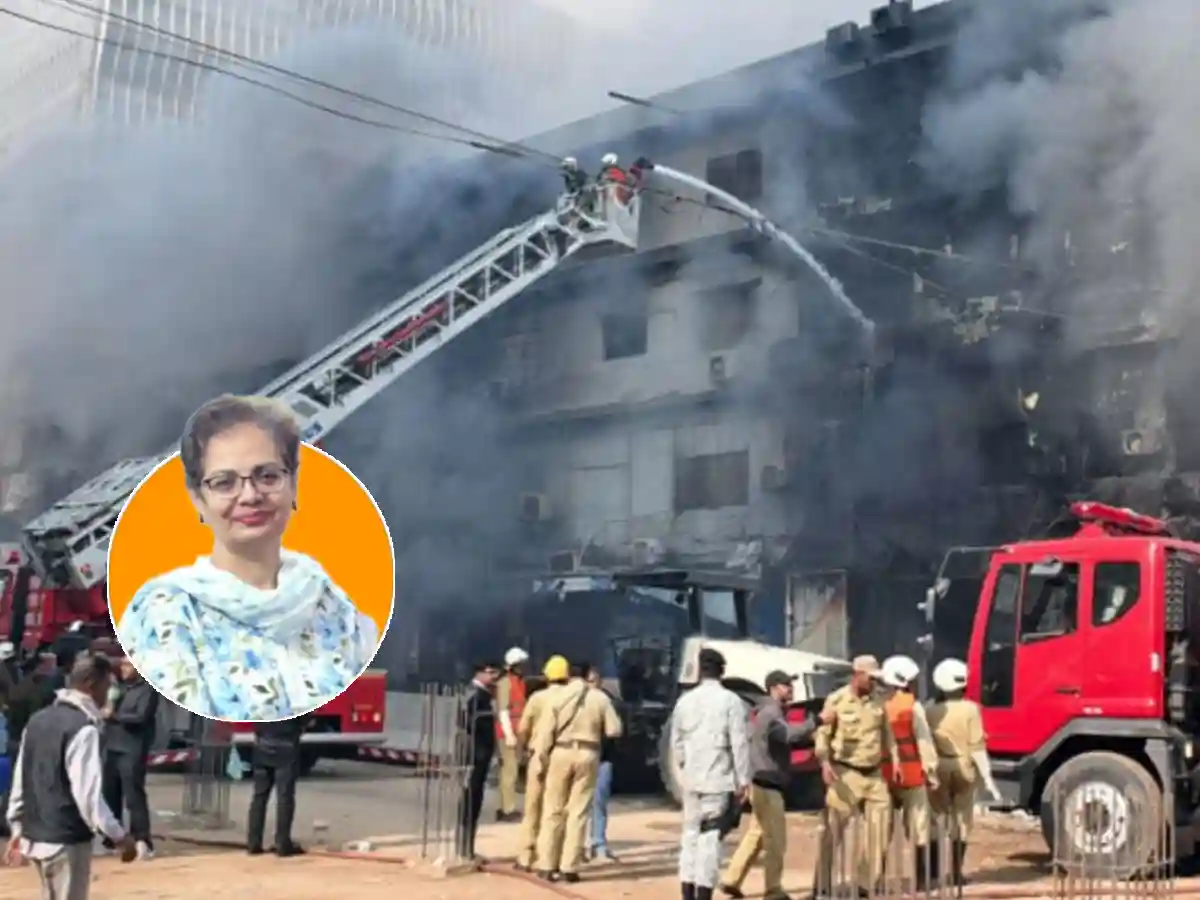
The death toll from the devastating Gul Plaza fire in Karachi has risen sharply to 61, as authorities revealed that DNA testing of several recovered remains is not possible due to their severely damaged condition.
According to Jang news report, police surgeon Dr. Samia confirmed on Wednesday that DNA samples cannot be obtained from remains recovered from two shops inside the fire-hit Gul Plaza.
She said that what is now being retrieved from the debris are not intact bodies but badly damaged human remains, including broken bones and teeth, making forensic identification extremely difficult.
Visit Times of Karachi website for the latest news-related content
According to Dr Samia, a total of 21 sets of remains have so far been brought from two shops, but it cannot yet be determined how many individuals these remains belong to.
“At this stage, we cannot confirm whether these are 21 bodies or parts of a larger number of victims,” she said, adding that the condition of the remains poses serious challenges in handing them over to heirs.
The situation became even more-grim after authorities confirmed the recovery of 30 bodies from a single crockery shop located on the mezzanine floor of Gul Plaza.
READ: Karachi Gul Plaza Fire, Live Updates
Deputy Inspector General (DIG) South Asad Raza said all 30 bodies were found inside the shop, where people had reportedly locked themselves in an attempt to escape the raging fire and suffocating smoke.
DIG South said mobile phone location data of several missing persons also traced back to the same shop, prompting focused rescue operations in that area.
Following information provided by shopkeepers, rescue teams temporarily halted operations on the third floor to concentrate efforts on the mezzanine.
READ: Three day ultimatum issued for fire safety system across Karachi
The owner of the crockery shop told officials that at the time of the incident, several cousins, employees, women, and other people were present inside the shop, indicating that many victims may have taken shelter there as the fire spread rapidly through the building.
Dr Samia explained that due to the extreme heat, many bodies were reduced to skeletal remains, leaving no viable tissue for DNA sampling.
Follow the Times of Karachi channel on WhatsApp
This has left families in distress, as identification through forensic methods may not be possible in multiple cases.
Rescue operations continue amid dangerous structural conditions, while authorities struggle to document casualties accurately.
With dozens of families still waiting for answers, the Gul Plaza fire stands as one of the deadliest commercial building disasters in Karachi’s history, raising serious questions about safety standards, emergency exits, and preparedness.