




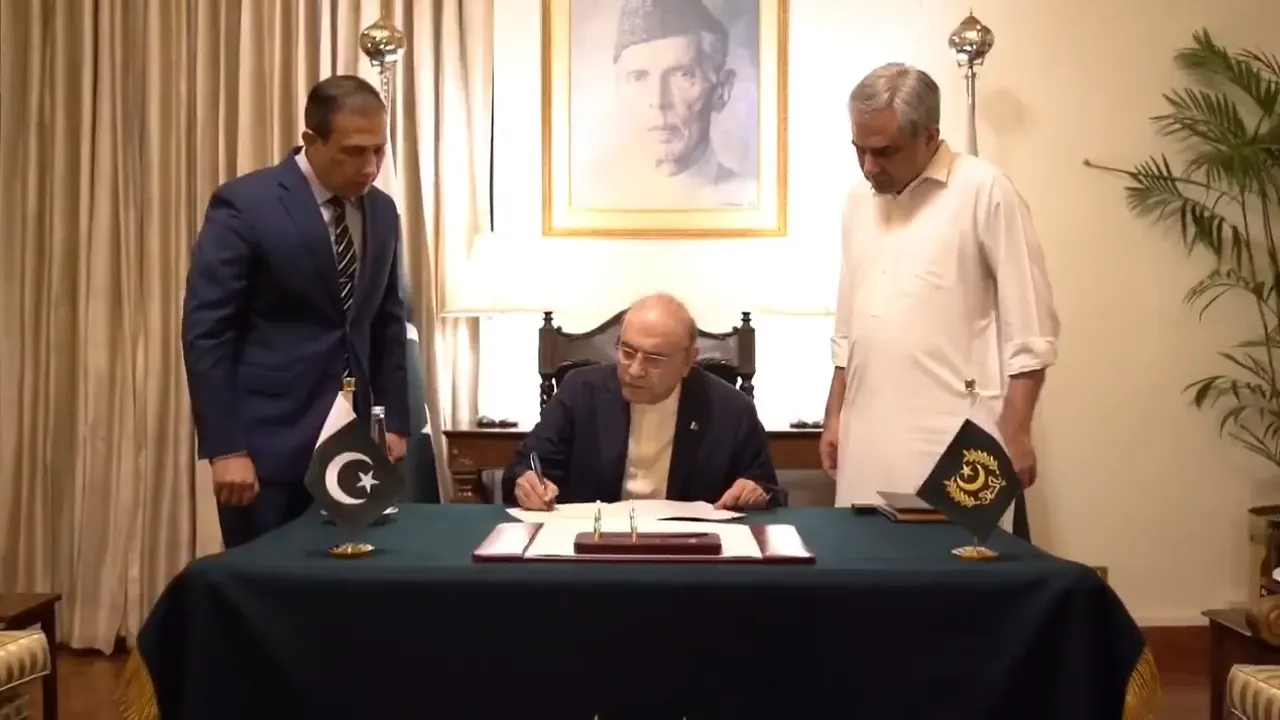
President Asif Ali Zardari has approved the imposition of an emergency and Governor’s Rule in Khyber Pakhtunkhwa (KP), placing the province under federal control following a decision by the federal cabinet on Sunday.
Follow Times of Karachi on Google News and add as a preferred Source on Google
The President House confirmed that the measures were approved under Articles 232(1) and 234(1) of the Constitution of Pakistan on the advice of Prime Minister Shehbaz Sharif.
The proclamation cited rising terrorist attacks, threats to public safety and concerns about the provincial government’s handling of law and order as grounds for the decision.
The move marks a significant escalation in tensions between the federal government and the Pakistan Tehreek-e-Insaf (PTI)-led provincial administration.
Federal Cabinet Approves Emergency Measures
The development followed an emergency meeting of the federal cabinet chaired by Prime Minister Shehbaz Sharif.
During the meeting, cabinet members reviewed the security situation in KP and considered the constitutional options available to the federal government. The cabinet subsequently approved the proposed measures, after which the prime minister sent formal advice to the president for approval.
Interior Minister Mohsin Naqvi, accompanied by Minister of State for Interior Talal Chaudhry, also travelled to the President House carrying the prime minister’s advice, according to the initial reports.
Terrorism and Law-and-Order Situation Cited
According to the presidential proclamation, the decision was taken in view of an increase in terrorist incidents and attacks targeting government installations, infrastructure and law enforcement agencies.
The proclamation stated that these developments posed serious threats to the lives and property of citizens and had created an emergency situation requiring constitutional intervention.
It also alleged that the KP government had failed to take adequate measures to address terrorism and lawlessness. The governor’s report reportedly raised concerns about the functioning of the provincial administration and whether the government was operating in accordance with the Constitution.
These are the federal government’s stated grounds for the decision and remain contested by the provincial leadership.
What Articles 232 and 234 Mean
Article 232 provides for the proclamation of an emergency under specified circumstances, including certain threats to security and public order.
Article 234 deals with a situation in which the constitutional machinery of a province is considered to have failed. It allows the president, subject to the constitutional requirements, to assume or direct the governor to assume certain provincial government functions.
The two provisions address different constitutional situations, and their use has prompted debate over the legal basis and scope of federal intervention in KP.
KP Chief Minister Had Opposed the Move
Before the president’s approval, KP Chief Minister Sohail Afridi had publicly rejected the prospect of emergency measures or Governor’s Rule, describing such a move as illegal and saying his government would not accept it.
Afridi’s remarks came amid heightened tensions between the federal government and PTI, including the party’s protest march towards Islamabad and disagreements over counterterrorism policy.
The federal government, meanwhile, has argued that the worsening security situation requires action and has criticised the provincial administration’s approach to combating militancy.
Political and Constitutional Implications
The imposition of emergency measures is expected to intensify the political dispute between the federal government and PTI. The scope of the proclamation, the administration of the province and the legal questions surrounding the intervention are likely to remain central issues in the coming days.
The development also places renewed attention on the constitutional relationship between the federation and provincial governments, particularly during periods of political confrontation and security challenges.
Further developments will depend on the implementation of the presidential proclamation, the response of the provincial leadership and any subsequent constitutional or legal proceedings.