





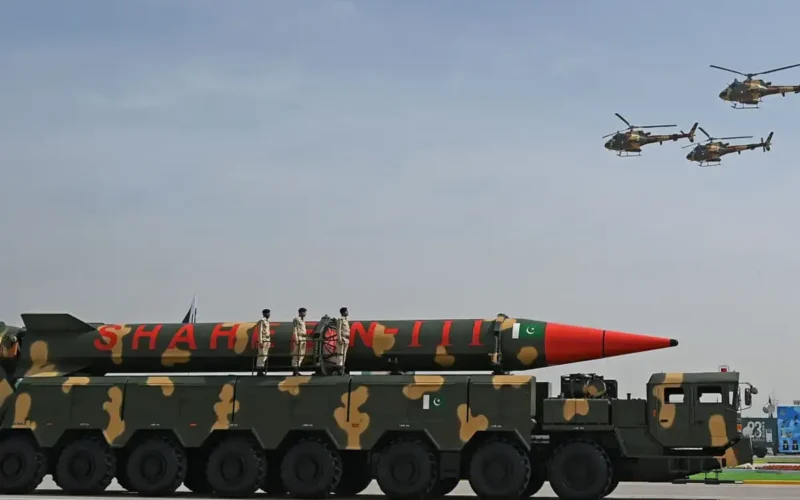
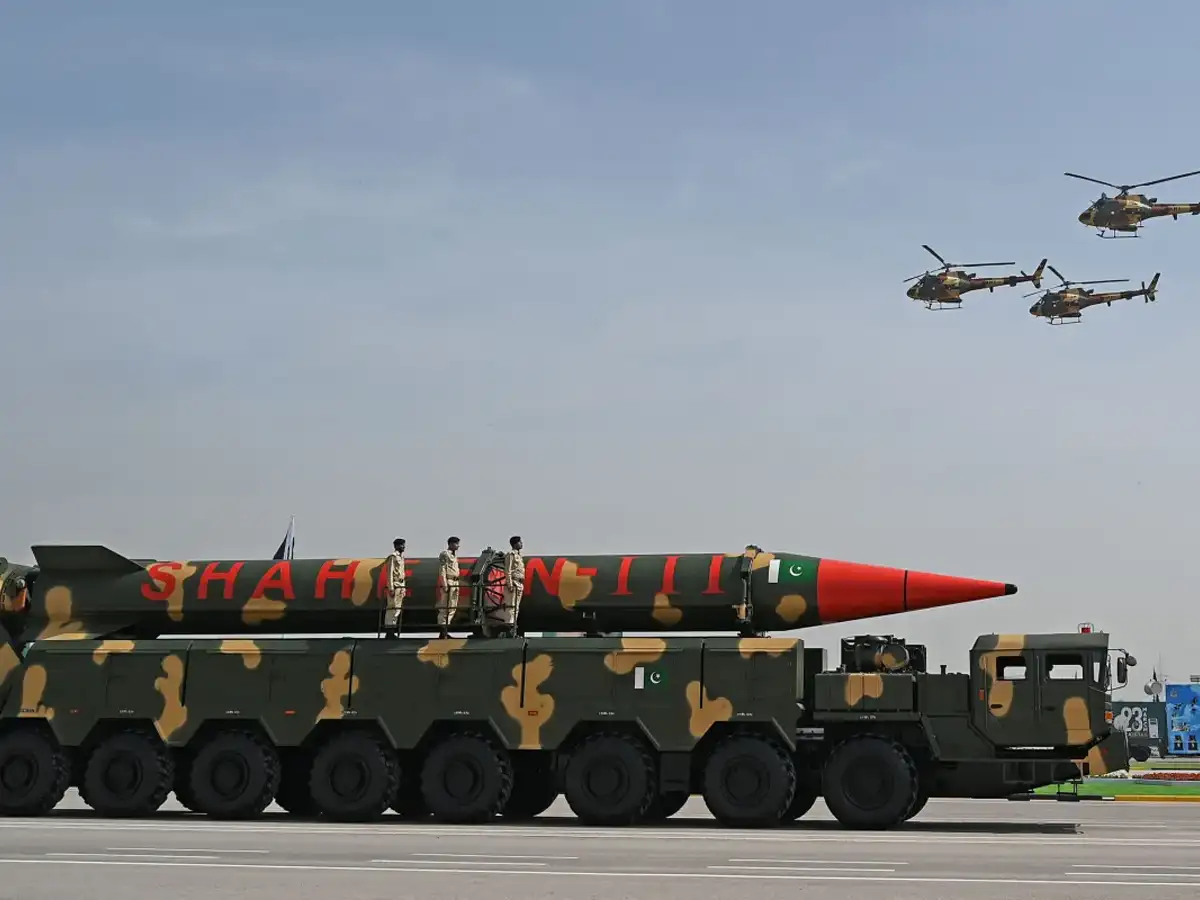
US Director of National Intelligence Tulsi Gabbard has warned that Pakistan’s advancing missile programme could pose a future risk to the United States, telling lawmakers that long-range capabilities may eventually put the US homeland within reach.
Speaking before the United States Senate Intelligence Committee during the 2026 Annual Threat Assessment, she said, “Russia, China, North Korea, Iran and Pakistan have been researching and developing an array of novel, advanced, or traditional missile delivery systems with nuclear and conventional payloads, that put our Homeland within range.”
Visit Times of Karachi website for the latest news-related content
She added, “Pakistan’s long-range ballistic missile development potentially could include ICBMs with the range capable of striking the Homeland.”
Gabbard noted that these countries are likely monitoring US missile defence strategies to refine their own systems and better understand Washington’s deterrence approach.
She also warned that missile threats are expected to rise sharply in the coming years, with global inventories projected to increase significantly by 2035.
Reacting to the report, Washington-based analyst Shuja Nawaz said Pakistan’s inclusion reflects a continuation of earlier US policy trends.
He argued that most assessments place the range of Pakistan’s Shaheen-III missile below 2,800 kilometres and stressed that Islamabad’s nuclear capability is primarily aimed at deterring India.
“There is no reason for Pakistan to target the United States or any other country outside South Asia. Such assessments undermine the budding US-Pakistan relationship,” he said.
READ: Trump urges China, allies to help reopen Strait of Hormuz
Another expert, Michael Kugelman, described the remarks as notable but not unusual. He pointed out that Pakistan was mentioned alongside several other countries and was not singled out individually.
Meanwhile, Gabbard also highlighted concerns beyond state actors, warning that militant groups in South Asia continue to threaten US interests.
She said such groups are likely to take advantage of instability and ungoverned areas to rebuild their strength.
The intelligence assessment further described South Asia as a region of ongoing security challenges, particularly due to tensions between Pakistan and India.
It cautioned that relations between the two nuclear-armed neighbours still carry the risk of escalation.
The report also referred to strained ties between Pakistan and Afghanistan, noting Islamabad’s concerns over militant groups operating across the border. It said clashes and tensions have continued, despite calls for dialogue from Afghan authorities.
On the Middle East, Gabbard said Iran’s government has been weakened since the conflict that began in late February, but it still has the ability to target US and allied interests.
“The regime in Iran appears to be intact but largely degraded by Operation Epic Fury,” she said.
During the hearing, Democratic Senator Michael Bennet raised concerns about the lack of clarity in US strategy towards Iran.
CIA Director John Ratcliffe responded that Tehran has long remained a serious threat and continues to pose immediate risks.
Follow the Times of Karachi channel on WhatsApp
The session also touched on internal developments within the intelligence community, including the resignation of a senior aide to Gabbard amid disagreements related to the ongoing conflict.
Overall, US officials signalled that both state and non-state threats are evolving rapidly, with missile development and regional instability remaining key concerns for Washington’s security outlook.