






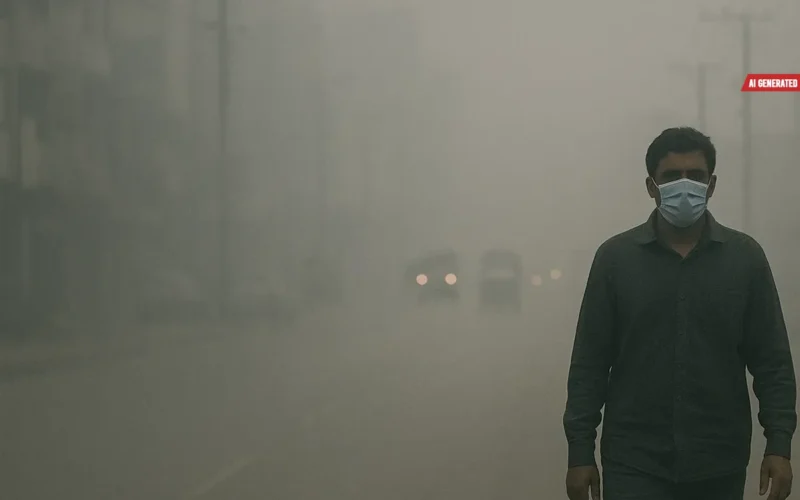

Karachi’s persistent pollution crisis continued on Tuesday, with air quality largely stagnant in harmful ranges across the metropolis
Data collected at 6:00pm highlighted elevated particulate matter (PM2.5) levels, with multiple areas crossing unhealthy thresholds, raising concerns for residents, commuters, children, elderly citizens, and people with respiratory conditions.
Garden’s AQI surged to a “Very Unhealthy” 172, a major deterioration from recent days. This level poses serious health risks to the entire population in that zone.
Other major areas, including Orangi Town and Gulistan-e-Johar, remained “Unhealthy for Sensitive Groups.” The data shows a patchwork of hazardous air across the metropolis.
The three-day forecast suggests conditions will persist with minor fluctuations. No significant cleansing of the atmosphere is expected over the coming week.
Yasir Darya, director of the Climate Action Center in Karachi, described the city’s air as stagnant and heavily polluted.
He attributed the poor air quality to the high number of petrol- and diesel-powered vehicles and dust particles from widespread construction across main arteries of Karachi.
Visit Times of Karachi website for the latest news-related content
He warned that PM 2.5 particles from fossil fuels and construction dust pose serious health risks.
Darya urged all residents, especially minors, to wear face masks when going outdoors to reduce exposure to harmful PM2.5 particles.
This news report is produced in collaboration with Climate Action Center Karachi.
How many categories are there to measure Air Quality?
AQI 0–50: Good
The air quality is considered excellent, with minimal or no risk to public health. There are no necessary precautions for the general population.
AQI 51–100: Moderate
Air quality is generally acceptable; however, there may be a slight health concern for a small number of individuals who are unusually sensitive to air pollution. Active children, adults, and people with respiratory conditions like asthma should consider limiting prolonged outdoor activity.
AQI 101–150: Unhealthy for Sensitive Groups
Sensitive individuals, such as those with asthma or other respiratory issues, may begin to experience health effects, although the general population is unlikely to be affected. It is advised that active children, adults, and those with respiratory conditions limit extended outdoor exertion.
Follow the Times of Karachi channel on WhatsApp
AQI 151–200: Unhealthy
Health effects may begin to affect everyone, with sensitive groups potentially experiencing more serious symptoms. Active children and adults, and people with respiratory illnesses should avoid prolonged outdoor activity, while others—especially children—should reduce outdoor exertion.
AQI 201–300: Very Unhealthy
This range signals emergency-level health warnings. The entire population is more likely to experience adverse health effects. Those with respiratory conditions and active individuals should avoid all outdoor activity, while everyone else, particularly children, should limit time spent outdoors.
To stay informed about current Karachi Air Quality, visit TOK Weather Page
AQI 300+: Hazardous
Air quality is extremely poor, posing a serious risk to health for everyone. A health alert is in effect, and all outdoor exertion should be avoided by the entire population.