




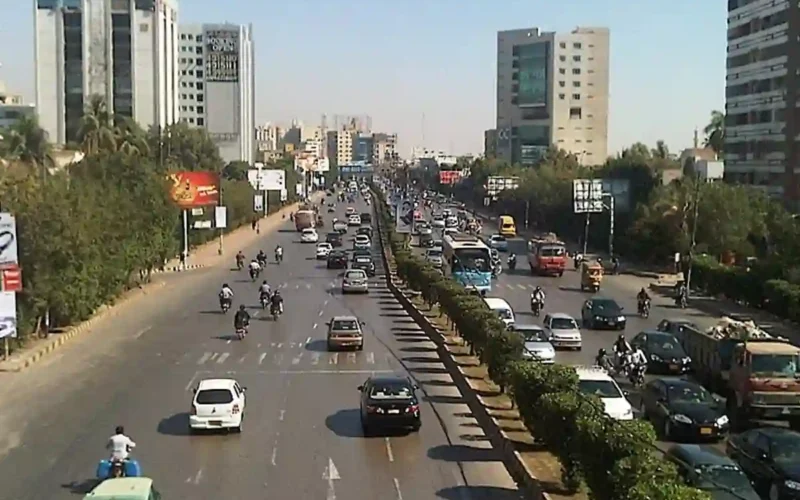
Karachi Traffic Police recently enforced new speed limits across all major city roads as part of its comprehensive digital monitoring system.
According to DIG Traffic Pir Muhammad Shah, motorcycles and light transport vehicles will now be limited to 60 km/h across Karachi.
Follow the Times of Karachi channel on WhatsApp
He announced that heavy transport vehicles will be limited to 30 kmph as a measure to decrease road accidents, improve discipline, and regulate commercial traffic within Karachi’s congested corridors.
DIG Shah confirmed that advanced speed-monitoring systems equipped with high-resolution cameras have been installed on major roads to automatically track and record vehicle speed through integrated surveillance networks.
He added that tracking devices will also be installed in 10,000 heavy vehicles operating in Karachi and fully connected to the Traffic Regulation and Citation System, or TRACS, which will provide real-time speed data.
READ: Sindh police begin crackdown on vehicles without proper number plates
Shah informed local media outlet that TRACS has become operational across 40 percent of Karachi, linking with 1,717 cameras across the city.
Officials reported that District South is the first area to experience full connectivity, with major thoroughfares like Shahrah-e-Faisal fully integrated into an automated enforcement and citation network.
Visit Times of Karachi website for the latest news-related content daily
Malir, Korangi, East Keamari and Central districts are also now using the digital system, where e-challans are now being issued for speeding, wrong-way movements, helmet violations or misuse of mobile phones while driving.
DIG Shah further explained that the system will soon expand into industrial zones like SITE, Landhi, New Karachi and Korangi to strengthen enforcement with automated cameras and speed-detection tools.
He noted that Karachi’s upgraded Traffic Management System would be fully implemented next year, with work commencing in January 2026 on installing 11,000 additional cameras across major intersections and highways.