




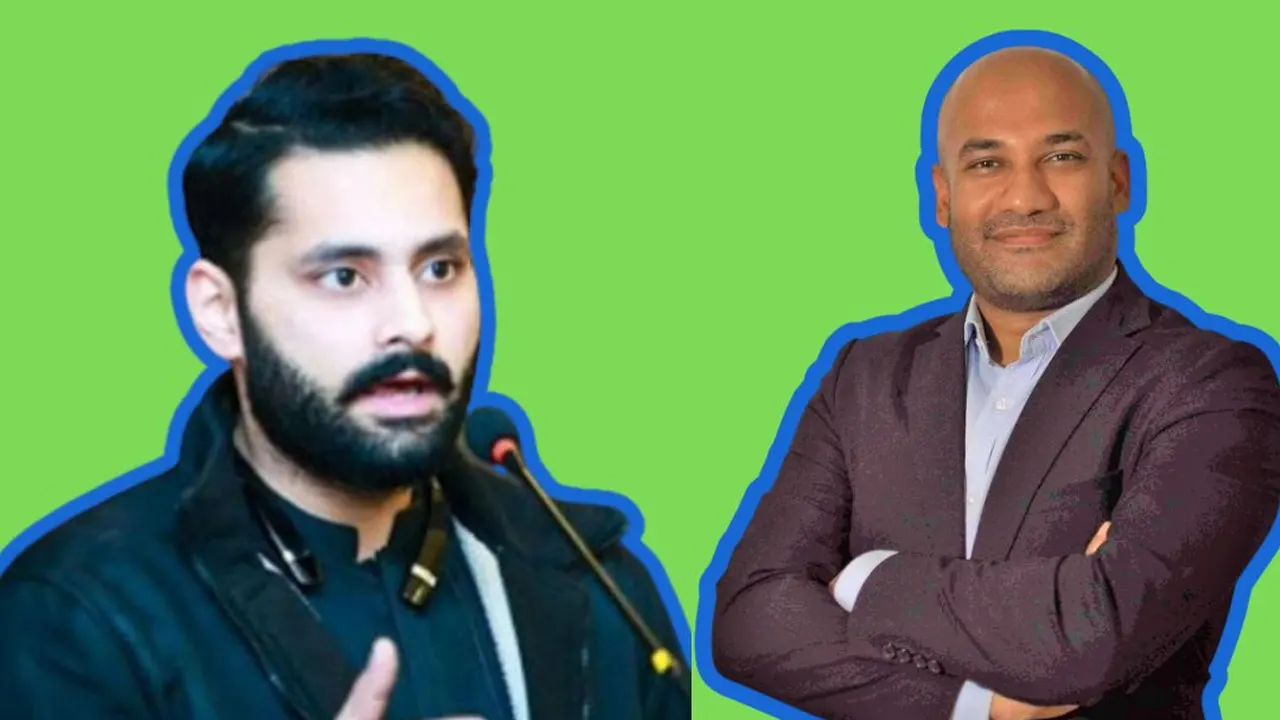
Environmental issues featured prominently in the campaigns of two independent candidates contesting the PS-110 constituency in Karachi South during the 2024 general elections.
Follow Times of Karachi on Google News and add as a preferred Source on Google
Ahmad Shabbar entered electoral politics with a campaign centred almost entirely on climate justice and environmental protection. He described himself as Pakistan’s first climate-justice electoral candidate and contested the provincial assembly seat as an independent candidate using the electoral symbol “Roots.” Contemporary reporting also identified him as the founder of the Pakistan Maholiati Tahaffuz Movement.
Shabbar said his electoral campaign was intended to lay the foundation for a broader green political movement and that he hoped to establish a dedicated green political party after the election.
A scientist and engineer by professional background, Shabbar developed a climate-focused manifesto covering environmental regulation, renewable energy, urban planning, climate migration and environmental justice.
He had also been involved in environmental campaigns and litigation concerning Karachi’s coastline and development projects, including the Bundal and Buddo islands. His environmental work has included advocacy through the Pakistan Maholiati Tahaffuz Movement and other climate-focused initiatives.
Ahmad Shabbar’s Green Manifesto
Shabbar’s proposed manifesto included the following measures:
- Making Environmental Impact Assessments compulsory for development projects.
- Requiring relevant departments to assess smaller infrastructure projects, including street-level water-line maintenance, with audits by local and provincial governments.
- Increasing Karachi’s green cover to 25 percent.
- Installing solar-powered streetlights.
- Promoting construction materials suited to Karachi’s local climate.
- Preventing illegal land reclamation and the use of waste-filled foundations.
- Providing real-time local and city-wide Air Quality Index (AQI) data to the public.
- Reviewing taxation related to eco-idle vehicles.
- Creating green jobs in solar and bioenergy, solid-waste management, agriculture, forestry and manufacturing.
- Establishing a Corporate Regenerative Endowment for Environment and Climate (CREEC) funded through compulsory contributions from large corporations.
- Encouraging local solar-panel manufacturing through tax incentives.
- Converting the Bundal, Buddo and Khiprianwala island areas into a nature reserve, with priority rights for indigenous and local communities.
- Opposing encroachment on land associated with Kirthar National Park.
- Seeking protection for Karoonjhar and opposing mining activities there.
- Reviewing the Resettlement and Rehabilitation Policy Sindh 2022 with public and expert participation.
- Developing a Karachi Master Plan 2047 that takes climate risks and the city’s growing housing needs into account.
Several of these proposals reflected Shabbar’s broader argument that climate policy should be incorporated into urban planning and economic decision-making.
Focus on Climate, Faith and Migration
Shabbar’s proposed platform also included what it described as an “eco-faith” approach.
The proposal called for discussion on the relationship between faith and environmental protection and sought to explore how joint climate action could contribute to interfaith harmony.
Another proposal was a Climate Migration Protection Bill. Under the proposal, climate migrants would receive access to adequate housing, healthcare and education.
At the national level, Shabbar also called for greater transparency from institutions including the Ministry of Climate Change, the Executive Committee of the National Economic Council (ECNEC) and the Economic Coordination Committee (ECC).
He proposed disclosure of negotiations, agreements and financing documents involving international financial institutions and multilateral development banks in relation to international climate Loss and Damage financing.
Contemporary coverage of the 2024 election described Shabbar’s platform as one of the country’s more explicitly climate-focused electoral campaigns. His proposals included environmental regulation, clean water, sustainable infrastructure, public transport, green jobs and protection of environmental defenders.
Jibran Nasir’s Climate and Accountability Agenda
Another independent candidate contesting PS-110 was lawyer and human rights activist Jibran Nasir.
Nasir did not present a conventional printed manifesto in the same manner as Shabbar. Instead, he told Times of Karachi that his election-related mobile application represented his manifesto.
His campaign focused on access, accountability and justice for residents of the constituency. Contemporary reporting said his platform was designed to allow voters to communicate their concerns and improve access to constituency-level information.
Nasir had also been involved in environmental advocacy. According to the original collaborative report, he represented petitioners in the Bundal and Buddo islands preservation case, including Yasir Hussain, Shabbar and Dr Jamil Kazmi.
During the campaign, Nasir also spoke about protecting mangroves and the Bundal and Buddo islands, describing their preservation as part of a broader climate-justice agenda.
Two Different Approaches to Green Politics
The campaigns of Shabbar and Nasir reflected different approaches to bringing environmental issues into Karachi’s electoral politics.
Shabbar presented a detailed climate-focused manifesto covering everything from urban green spaces and renewable energy to climate migration, environmental regulation and corporate financing.
Nasir’s campaign combined his legal and human-rights work with an emphasis on voter access, accountability and environmental protection.
The 2024 election therefore provided a platform for climate-related issues that are often discussed outside conventional electoral politics, including coastal protection, air pollution, green jobs, renewable energy and climate migration.
Subedited by Maleeha Hamid Siddiqui
This story is a collaborative effort between The Citizenry and The Times of Karachi, in partnership with the Climate Action Center.