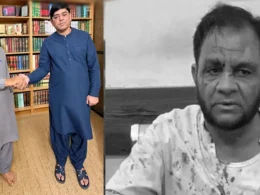





Pakistan has debunked India’s claim that an SSG commando was eliminated during an operation in Kashmir, presenting the former soldier before the media.
Follow Times of Karachi on Google News and add as a preferred Source on Google
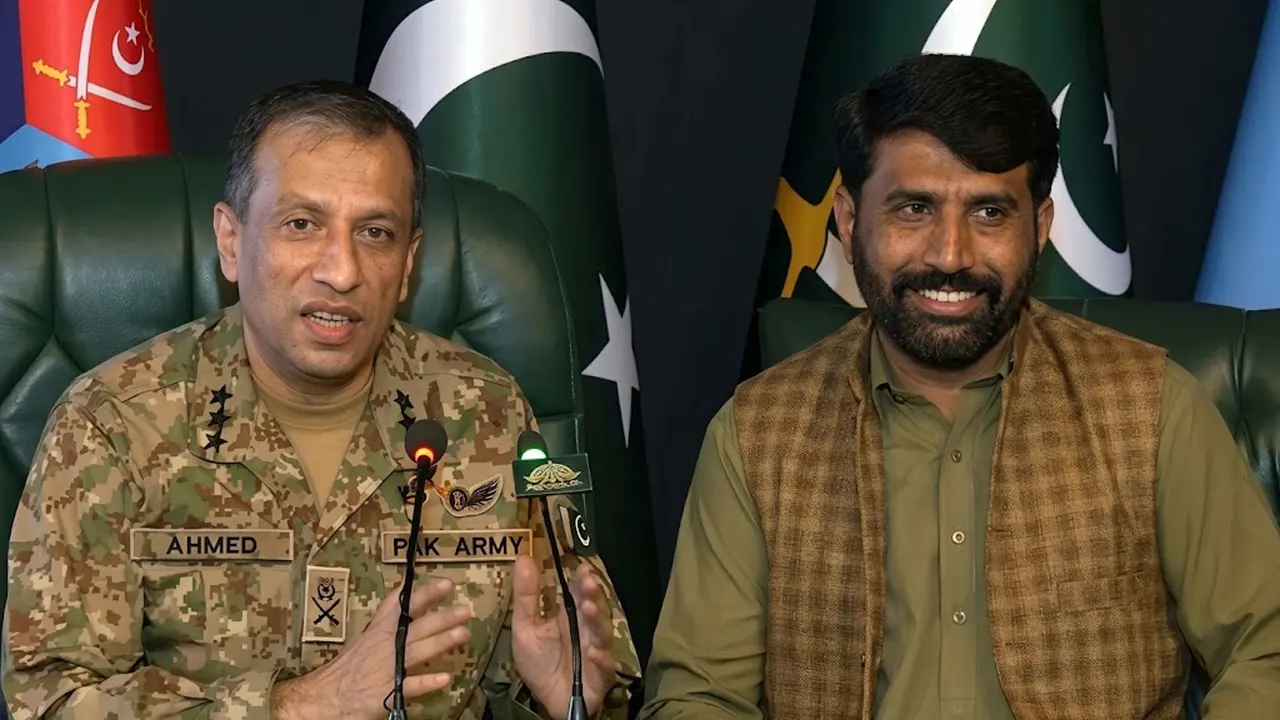
Addressing a press conference in Islamabad, Inter-Services Public Relations (ISPR) Director General Lieutenant General Ahmed Sharif Chaudhry presented retired Pakistan Army Havildar Muhammad Asif before the media after Indian authorities claimed that an SSG Commando identified as Muhammad Asif alias Hashim Musa had been killed during an operation in Indian-administered Jammu and Kashmir (IAJ&K).
OP KORAG, Yousmarg
— Chinar Corps🍁 – Indian Army (@ChinarcorpsIA) September 29, 2026
Based on specific intelligence input, a Joint Search Operation was launched by #IndianArmy, @JmuKmrPolice and @crpf_srinagar in general area Korag, Yousmarg.
Vigilant troops observed suspicious activity and upon being challenged, terrorists opened fire,…
The ISPR chief described the Indian account as a “false-flag operation”, while presenting the retired soldier as evidence that the person identified in Indian reports was not him.
According to Lt Gen Ahmed Sharif Chaudhry, the incident began on the night of September 29, when the Indian Corps posted on social media that a joint search operation had been launched in the Korag-Yousmarg area and that one terrorist had been “neutralised.”
Around seven hours later, the Indian Army issued an update claiming that the body of a Lashkar-e-Taiba militant identified as Mohammad Asif alias Hashim Moosa had been recovered along with weapons and other material in the Palmaidan area.
The DG ISPR said Indian news agency ANI subsequently published details identifying the alleged militant as a former Pakistan Army soldier.
Mohammad Asif alias Hashim Moosa was born on 07 March 1980. He joined the Pakistan Army in 2000 under service number PA-3106947 and retired with the rank of Havildar. In 2005, Mohammad Asif was inducted into the Special Services Group (SSG). He served with 4 Commando “Yalgar”… https://t.co/bQWmFFDuFF pic.twitter.com/dGgtr7fMeI
— ANI (@ANI) September 30, 2026
According to the account cited by the ISPR chief, the man was allegedly born on March 7, 1980, joined the Pakistan Army in 2000 under service number PA-3106947 and retired as a Havildar.
The report also claimed that he had joined the Special Services Group (SSG) in 2005, served with 4 Commando Yalgar Battalion and had been posted in Balochistan, where he allegedly participated in operations against militants.
Lt Gen Chaudhry questioned the reported identity and said the Pakistani military had evidence contradicting the claim.
He then presented Muhammad Asif before journalists.
Speaking to the media, Muhammad Asif said he was surprised to learn through social media that Indian forces had claimed to have killed him.
“I was surprised that I was at home, so how could the Indian Army have martyred me?” he said.
Asif said he began receiving phone calls after reports of his alleged death emerged.
He said he retired from the SSG in 2023 and currently works for a private security company while living in Rawalpindi.
“I am very much alive, I live in Rawalpindi,” Asif said.
He said he was originally from Pindigheb in Attock district and that friends had contacted him after seeing reports claiming that he had been killed.
Asif rejected the allegations against him and said he had served Pakistan during his military career.
DG ISPR Alleges Indian “False-Flag” Operation
Lt Gen Chaudhry said India had portrayed Muhammad Asif as a retired SSG Havildar involved in militant attacks.
The ISPR chief alleged that the incident was part of what he described as a broader Indian effort to create a narrative linking Pakistan and its security institutions to militant activity in Kashmir.
He also alleged that India supports militant organisations operating against Pakistan, including the Muttahida Bahini and Tehreek-e-Taliban Pakistan (TTP).
ISPR Chief Criticises India’s Kashmir Narrative
Lt Gen Chaudhry accused India of attempting to attribute its internal security problems to Pakistan and of using what he called fabricated stories to support its position on Kashmir.
He said India should provide evidence if it believed Pakistan was involved in any incident and reiterated that Pakistan had previously offered to have evidence examined through a third party.
“Please get out of this obsession with Pakistan,” the ISPR chief said, arguing that India should address its own internal challenges.
He also criticised what he described as India’s reliance on an “encounter” narrative, referring to incidents including Uri, Pathankot and Rajouri.
The DG ISPR questioned why senior Indian military officials would approve claims that, according to Pakistan, lacked factual basis.
He also accused Indian authorities of politicising the military and creating narratives to support political objectives.
DG ISPR Declines Questions on PTI and Politics
The ISPR chief also declined to comment on political questions concerning the Pakistan Tehreek-e-Insaf (PTI) long march and party founder Imran Khan.
He said the armed forces had nothing to do with politics and that political matters should be handled by political parties.
“Politics is for political parties. Politicians and political parties form governments,” he said.
Lt Gen Chaudhry reiterated that Pakistan’s armed forces were subject to the Constitution and followed the orders of the state.
He added that Pakistan had been fighting terrorism for more than two decades and remained among the countries significantly affected by terrorism.
The competing accounts surrounding the identity of the man reported killed in Budgam remain a point of dispute between Pakistani and Indian authorities.