




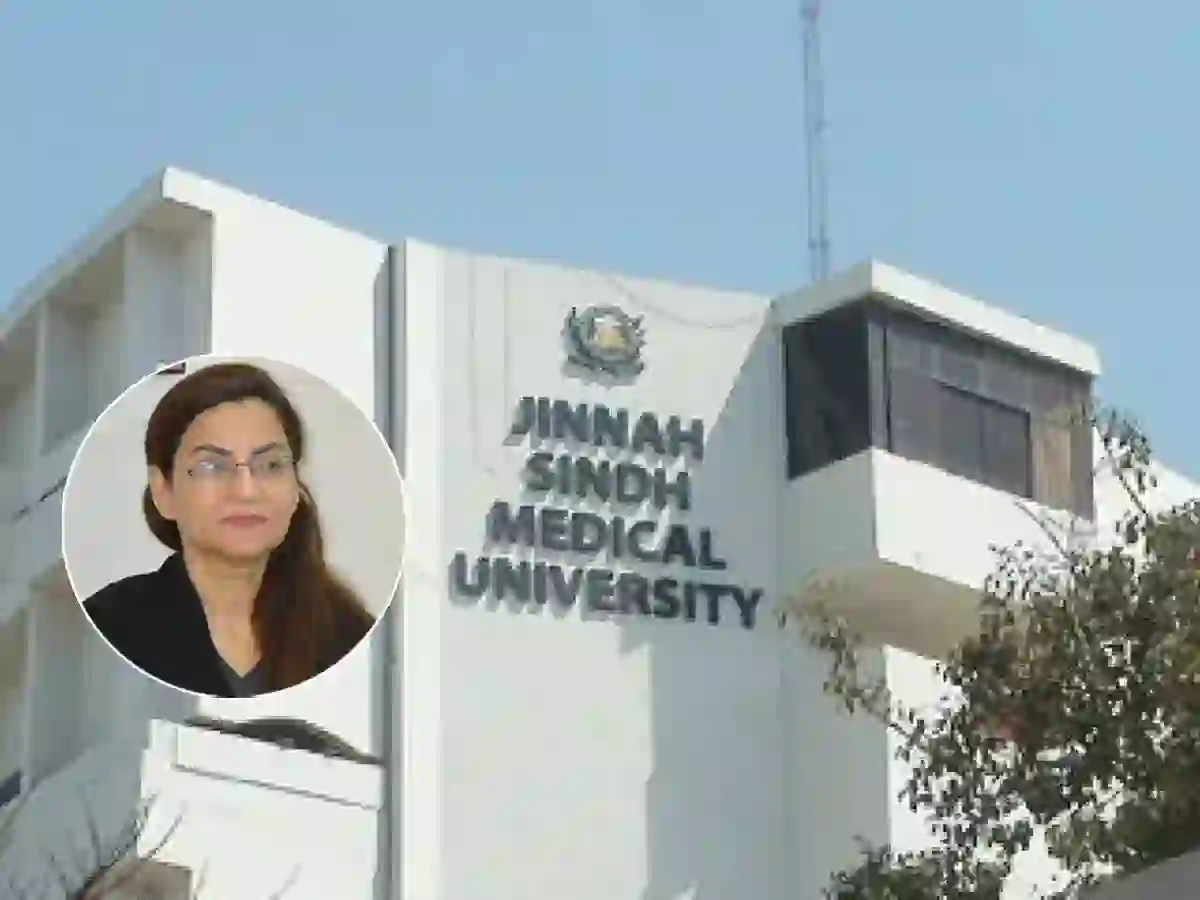
Professor Dr Nighat Shah, daughter of former Sindh chief minister Qaim Ali Shah, has been granted a three-year contractual appointment as professor at Jinnah Sindh Medical University (JSMU), just a day before she was due to retire from government service upon reaching the age of 60.
Follow Times of Karachi on Google News and add as a preferred Source on Google
The decision was approved by the Sindh cabinet and subsequently conveyed to the JSMU administration by the Sindh Universities and Boards Department.
In a letter addressed to the Vice Chancellor of JSMU, the department referred to the minutes of the provincial cabinet meeting held on August 5, 2026, particularly Agenda Item No. 16, and directed the university to implement the cabinet’s decision without delay.
According to the letter, the cabinet approved Dr Nighat Shah’s appointment for three years in accordance with the prescribed procedure under a Pakistan Medical and Dental Council (PM&DC) notification issued on May 19, 2026.
Sindh Cabinet cites public interest
The Sindh cabinet said the appointment was being considered in the “larger public interest” and cited the need to ensure continuity of specialised healthcare services and academic leadership.
It also highlighted the importance of postgraduate medical education, research, innovation and institutional excellence as reasons for retaining experienced faculty at medical teaching institutions.
The Universities and Boards Department directed the JSMU vice chancellor to implement the decision “in letter and spirit” and submit a compliance report detailing the action taken.
Retirement order had already been issued
The appointment comes after JSMU Vice Chancellor Prof Dr Amjad Siraj Memon had issued a memorandum confirming Dr Nighat Shah’s retirement from government service.
Under the earlier memorandum, Dr Nighat Shah, Professor of Gynecology and Obstetrics (BPS-21), was scheduled to retire on August 12, 2026, after attaining the government superannuation age of 60.
Also Read: CM Sindh Murad Ali Shah rejects Mohsin Naqvi’s new provinces proposal
She had initially joined JSMU as an associate professor and was later promoted to professor.
The cabinet’s latest decision means she will continue serving the university under a contractual arrangement rather than as a regular government employee.
Concerns over junior faculty’s promotions
The decision has also raised questions about its potential impact on the career progression of junior faculty members at JSMU.
According to information available, five experienced associate professors could potentially be affected in terms of their promotion prospects if the position remains occupied under the extended appointment.
The issue is particularly relevant because PM&DC’s notification allowing the engagement of retired faculty specifically addresses the need to protect the career progression and cadre structure of junior faculty members.
What PMDC rules say
In its notification dated May 19, 2026, the PM&DC allowed public-sector medical and dental institutions to engage retired faculty members on a contractual basis up to the age of 65.
However, the notification also stated that such appointments should not adversely affect the promotion prospects, career progression or cadre structure of junior faculty members.
The PM&DC further clarified that the provision was enabling in nature and was not mandatory or binding on every institution.
Follow the Times of Karachi channel on WhatsApp
As a result, the implementation of the policy at JSMU has prompted questions over how the three-year appointment will affect existing faculty members awaiting promotion.
CM Sindh defends appointment
Sindh Chief Minister Murad Ali Shah has defended the decision, saying Dr Nighat Shah’s appointment was made entirely on a contractual basis and in accordance with the applicable policy framework.
The chief minister said the appointment was consistent with PM&DC guidelines concerning the engagement of experienced professors at medical teaching institutions.
He maintained that the decision followed the established rules and policies governing medical education institutions.