






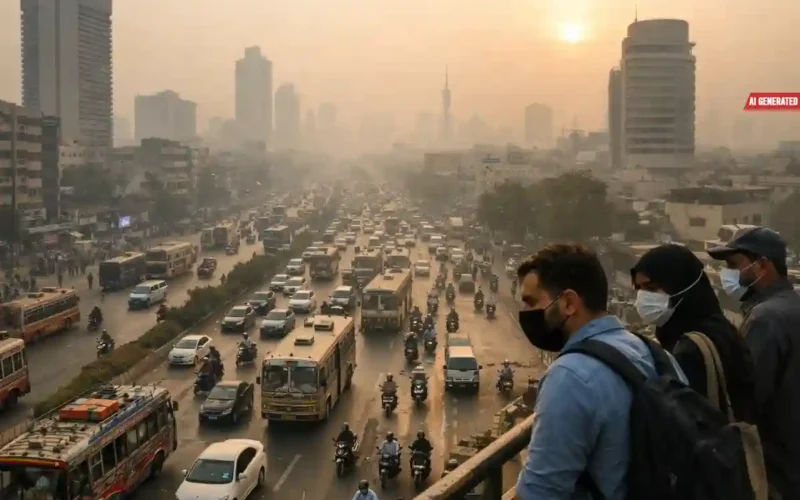
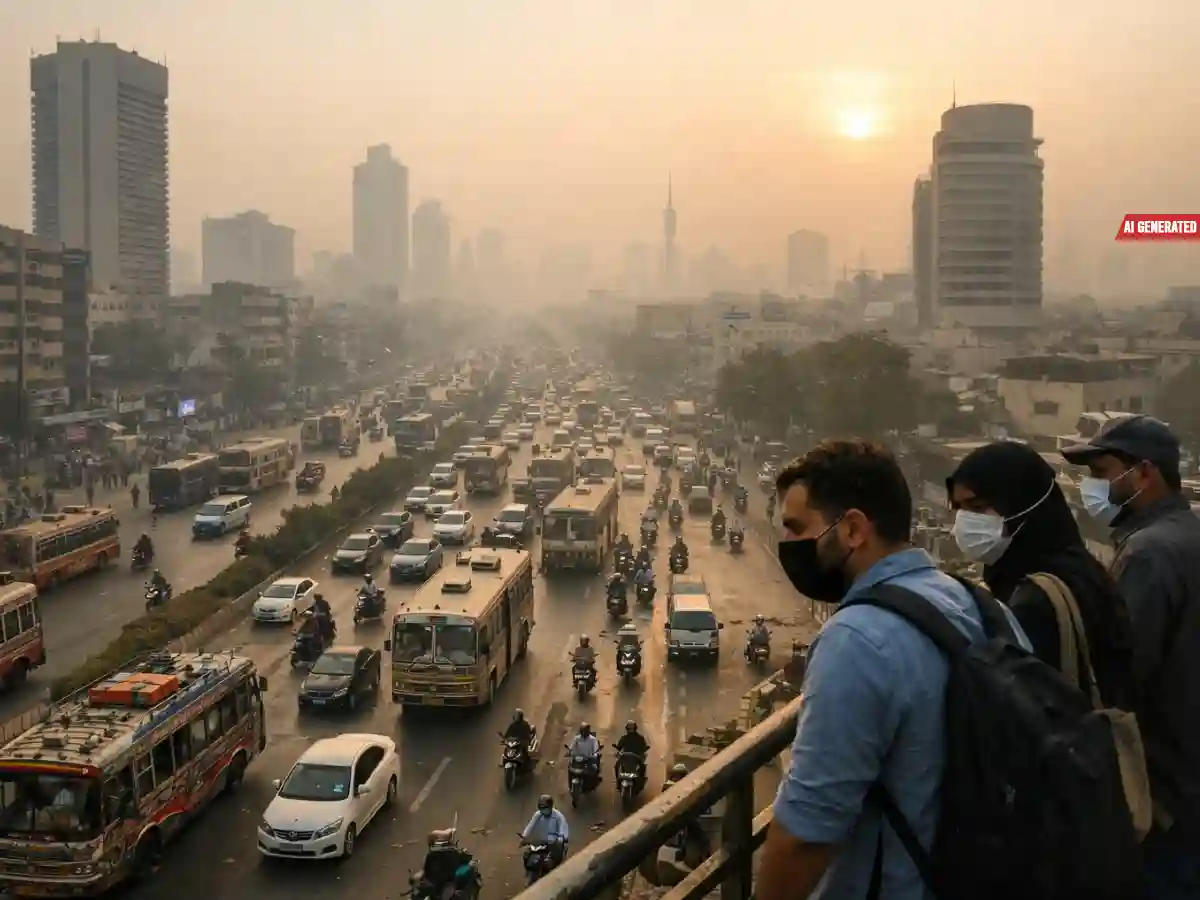
The Karachi Air Quality Index (AQI) showed unhealthy pollution levels in several parts of the city, raising concerns about air quality and public health.
According to the latest readings recorded at 7:22 PM on March 8, 2026, multiple areas reported moderate to unhealthy AQI levels.
North Nazimabad recorded the highest level with an AQI of 141, followed by Shahrah-e-Faisal at 130 and University Road at 124.
Meanwhile, Gulshan-e-Iqbal Block 14 reported an AQI level of 116, while DHA Phase 5 recorded the lowest reading among the monitored locations at 96.
Visit Times of Karachi website for the latest news-related content
Air quality experts classify AQI levels between 101 and 150 as unhealthy for sensitive groups, including children, the elderly, and people with respiratory conditions.
Authorities advise residents, especially those with asthma or breathing issues, to limit prolonged outdoor activities when pollution levels rise.
Air Quality Forecast for Karachi
The short-term forecast suggests that pollution levels may continue to rise slightly in the coming days.
- March 9: AQI expected around 79
- March 10: AQI may increase to 93
- March 11: AQI could reach 112
Environmental analysts say weather patterns, traffic congestion, and industrial emissions play a major role in Karachi’s fluctuating air quality.
Karachi, Pakistan’s largest city, frequently experiences air pollution during the winter and early spring months. Factors such as heavy traffic, construction dust, industrial emissions, and limited green cover contribute to deteriorating air quality.
Environmental experts have repeatedly called for stricter emission controls and better urban planning to improve the city’s air conditions.
This news report is produced in collaboration with Climate Action Center Karachi.
Karachi Air Quality
How many categories are there to measure Air Quality?
AQI 0–50: Good
The air quality is considered excellent, with minimal or no risk to public health. There are no necessary precautions for the general population.
AQI 51–100: Moderate
Air quality is generally acceptable; however, there may be a slight health concern for a small number of individuals who are unusually sensitive to air pollution. Active children, adults, and people with respiratory conditions like asthma should consider limiting prolonged outdoor activity.
AQI 101–150: Unhealthy for Sensitive Groups
Sensitive individuals, such as those with asthma or other respiratory issues, may begin to experience health effects, although the general population is unlikely to be affected. It is advised that active children, adults, and those with respiratory conditions limit extended outdoor exertion.
Follow the Times of Karachi channel on WhatsApp
AQI 151–200: Unhealthy
Health effects may begin to affect everyone, with sensitive groups potentially experiencing more serious symptoms. Active children and adults, and people with respiratory illnesses should avoid prolonged outdoor activity, while others—especially children—should reduce outdoor exertion.
AQI 201–300: Very Unhealthy
This range signals emergency-level health warnings. The entire population is more likely to experience adverse health effects. Those with respiratory conditions and active individuals should avoid all outdoor activity, while everyone else, particularly children, should limit time spent outdoors.
To stay informed about current Karachi Air Quality, visit TOK Weather Page
AQI 300+: Hazardous
Air quality is extremely poor, posing a serious risk to health for everyone. A health alert is in effect, and all outdoor exertion should be avoided by the entire population.