






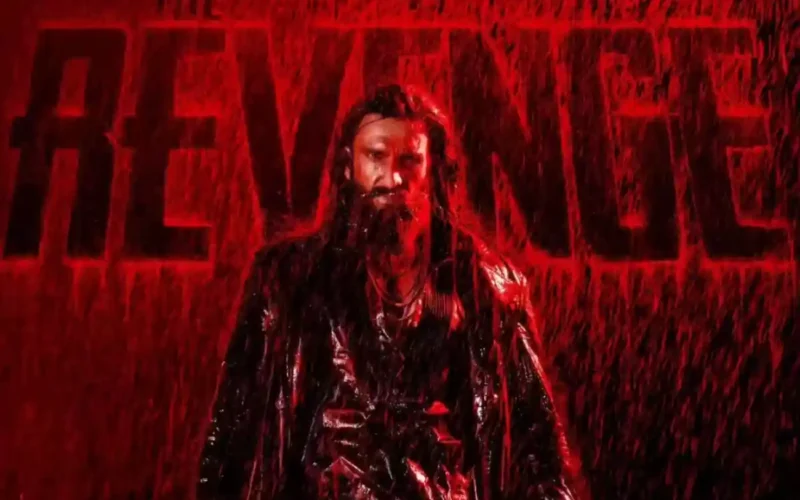

The upcoming Bollywood sequel “Dhurandhar 2: The Revenge” has reignited controversy following the release of its first look, with critics once again questioning the film’s portrayal of Pakistan and regional politics.
Directed by Aditya Dhar, the sequel to Dhurandhar has already drawn attention for what many describe as a continuation of a one-sided and exaggerated narrative involving India-Pakistan relations.
The newly released teaser and poster, featuring Ranveer Singh in a bloodied avatar under intense red lighting, suggest that the film will double down on its aggressive tone.
Visit Times of Karachi website for the latest news-related content
While the filmmakers are promoting Dhurandhar 2 as a high-octane spy thriller, early visuals indicate that the storyline remains centered on heightened India-Pakistan tensions.
The teaser presents Pakistan as a hostile state, with its military and intelligence agencies shown in a negative light, a depiction that has drawn criticism from audiences.
The character of Major Iqbal, played by Arjun Rampal, reportedly continues to portray Pakistan’s intelligence agency as the main antagonist behind an alleged cross-border terror network.
Dhurandhar: India’s another ‘fantasy’ film depicts Karachi’s Lyari as hub of terrorism
Critics argue that this narrative oversimplifies complex geopolitical realities and promotes a distorted version of events for cinematic effect.
Despite the controversy, the film has generated significant buzz.
Ranveer Singh’s intense performance as an undercover Indian agent and the film’s large-scale action sequences have attracted attention, particularly among audiences in Pakistan and the UAE, where discussions around the film are trending on social media.
However, skepticism remains strong. Many viewers believe the film glorifies India’s alleged “victories” while selectively ignoring broader historical and political contexts.
Follow the Times of Karachi channel on WhatsApp
Critics argue that Dhurandhar 2, much like its predecessor, prioritizes sensationalism over nuance, reinforcing stereotypes rather than encouraging understanding.
In Pakistan, the film is widely viewed as an attempt to demonize the country’s military and intelligence institutions. Commentators have accused Bollywood of repeatedly using cinema as a tool to reshape narratives for domestic audiences, often at the cost of regional harmony.
Films like Dhurandhar 2 oversimplify conflicts, turning real-life geopolitical struggles into mere entertainment. The question remains—how much further will Bollywood go in using cinema to manipulate narratives for domestic consumption, while continuing to vilify Pakistan?