




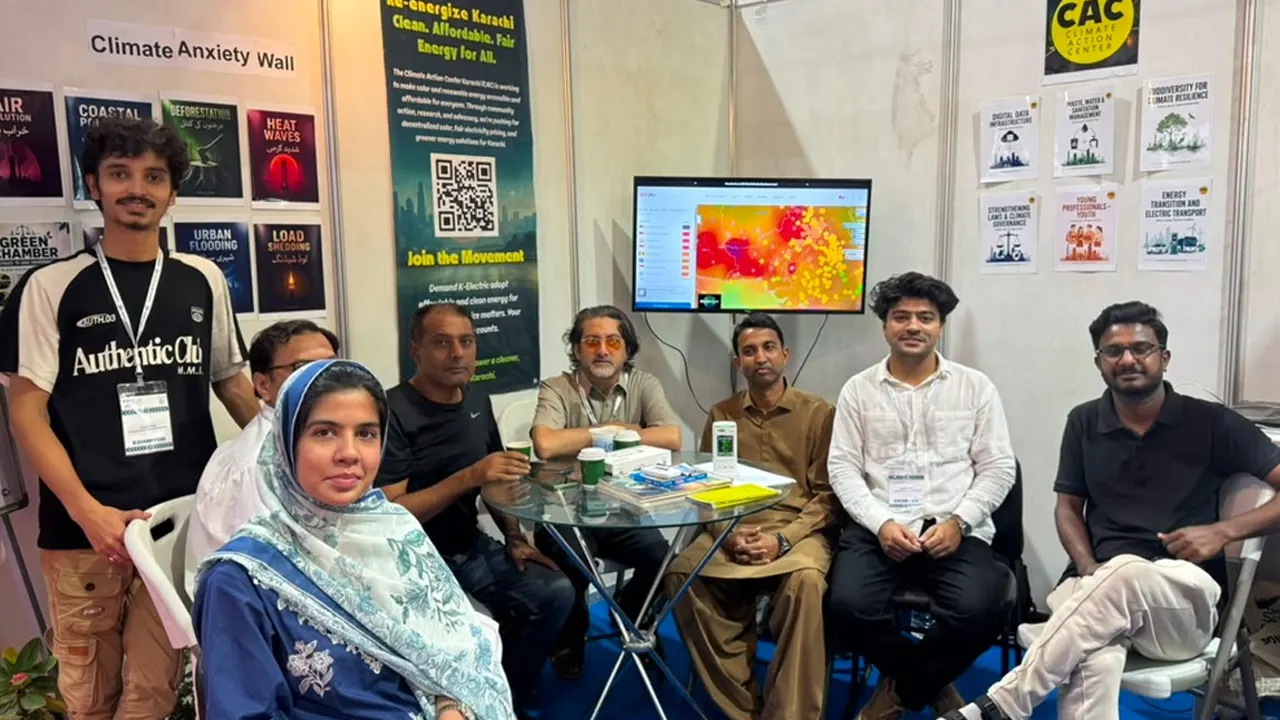
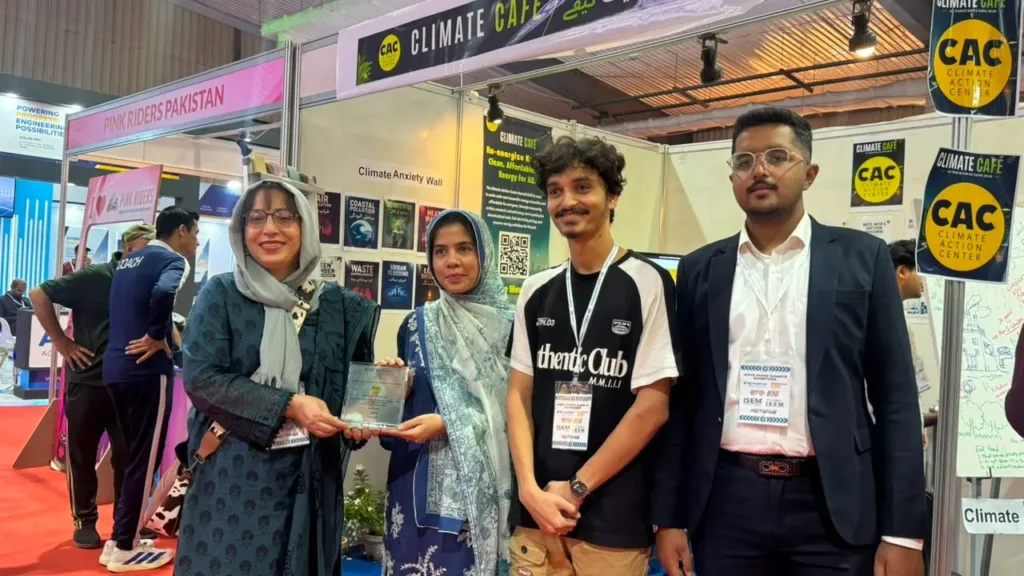
The Climate Action Centre (CAC) used the three-day EV Expo in Karachi to promote public awareness about climate change, clean energy, electric mobility, air quality and urban resilience through an interactive initiative titled “Climate Café.”
Follow Times of Karachi on Google News and add as a preferred Source on Google
The initiative was designed as a public engagement platform where visitors could learn about CAC’s work, ask questions, share their views and discuss environmental challenges facing Karachi.
Throughout the expo, CAC’s team and project managers interacted with visitors and discussed issues including electric vehicles, clean energy, air pollution, extreme heat and climate awareness.
One of the main attractions at the Climate Café was a live demonstration of Karachi’s air quality.
Visitors were shown real-time readings from a smart air-quality sensor and briefed on the potential implications of air pollution for public health and the urban environment.
A large screen displayed air-quality information from different parts of Karachi, helping visitors understand how pollution levels vary across the city.
The activity aimed to present air quality as an everyday public health issue rather than simply a collection of statistics.
The Climate Café also featured a “Climate Anxiety Wall”, where visitors were asked to identify the environmental issue they considered the biggest threat to Karachi and suggest possible solutions.
The activity encouraged participants to move beyond identifying problems and think about practical ways to contribute to climate action.
Another interactive feature, the “Climate Canvas,” invited visitors to write their thoughts, messages and suggestions about climate change and environmental protection.
By the end of the three-day expo, the canvas had been filled with messages calling for greater environmental responsibility, including stronger protection and plantation of trees.
Children participate in climate activities
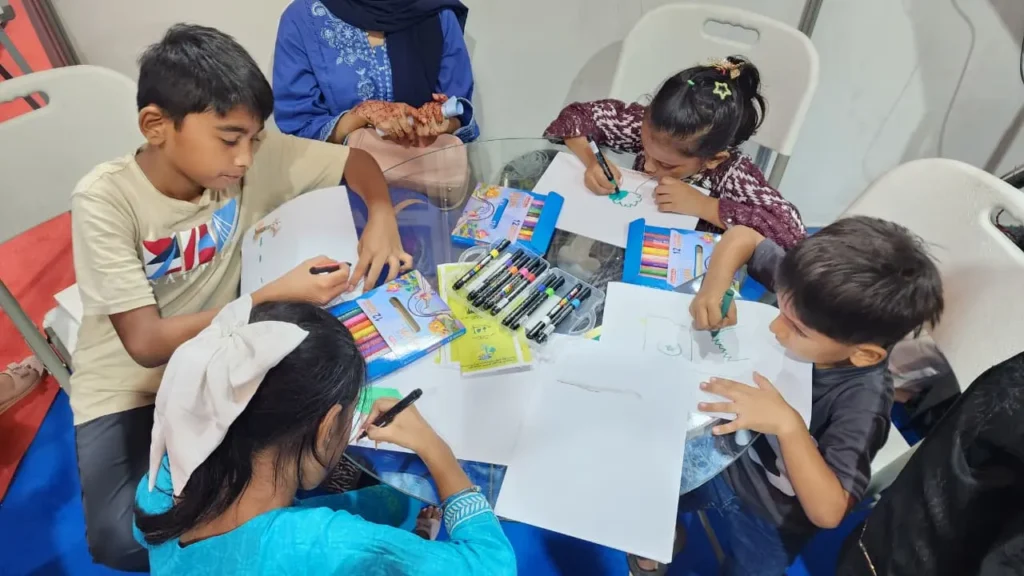
Children were also encouraged to participate through a creative drawing activity.
They used drawings to express their views about the environment, climate change and their vision for a better future, highlighting the importance of involving younger generations in climate discussions.
The Climate Café also facilitated informal discussions between visitors and CAC team members on Karachi’s environmental challenges, air pollution, clean energy and electric mobility.
CAC director joins public discussions
Climate Action Centre Director Yasar Hussain also participated in the activities and interacted with visitors.
He contributed to the discussion by writing “Karachi and Climate Challenges” on the climate board, highlighting the relationship between the city’s future and its ability to respond to growing environmental pressures.
CAC said the Climate Café was designed to be more than a conventional exhibition stall, providing visitors with an opportunity to learn, ask questions, share experiences and engage directly with climate-related issues.
The initiative also highlighted the broader connection between electric mobility, clean technology, energy, air quality, public health and urban development.
The three-day Climate Café concluded with a shared focus on building a cleaner, greener and more climate-resilient Karachi.
Earlier to this, CAC Karachi has hosted an online webinar to mark the launch of the Urdu edition of Dipesh Chakrabarty’s acclaimed book, The Climate of History in a Planetary Age, as part of its Imagining Life programme.
The book explores how climate change challenges conventional approaches to history and calls for a shift away from human-centred narratives towards a broader understanding of humanity’s relationship with the planet.
The Urdu edition aims to make these discussions accessible to a wider Urdu-reading audience while encouraging greater engagement with climate-related thought and debates in Pakistan.