



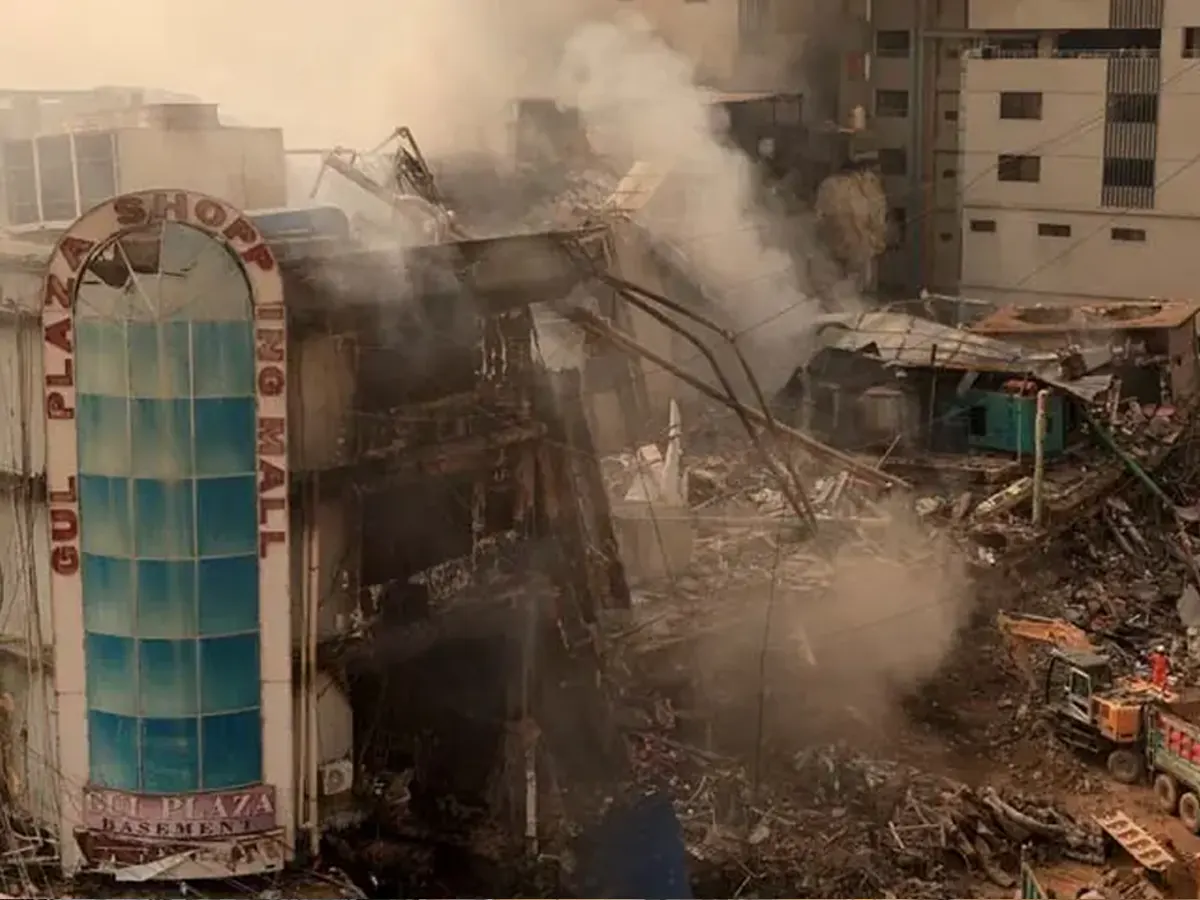
A judicial commission investigating the devastating Gul Plaza fire in Karachi has found that the tragedy was not caused by the failure of a single institution, but resulted from a collective failure of the system involving successive provincial and local governments and multiple stakeholders.
Follow Times of Karachi on Google News and add as a preferred Source on Google
The Sindh Home Department has released the inquiry commission’s report, which identified a series of safety violations, regulatory failures and shortcomings before and during the deadly fire.
According to the report, Gul Plaza continued to operate as a commercial building despite being considered hazardous and remaining in violation of fire safety requirements.
The commission found that the building’s management failed to rectify known safety deficiencies despite repeated identification of serious hazards.
Civil Defence inspections conducted in 2024 and 2025 had reportedly highlighted several problems, including:
- Lack of adequate fire safety equipment
- Presence of inflammable materials
- Problems with emergency exits
- Other violations of prescribed safety requirements
Despite these findings, the building remained in commercial use.
The commission also criticized the failure to promptly alert the fire brigade after the blaze started, describing the delay as an “extremely unwise” failure that worsened the situation.
The inquiry report said the situation became more dangerous after electricity was disconnected from the building.
The resulting darkness made it more difficult for people trapped on upper floors to find their way out and reduced the chances of a safe evacuation.
Also Read: Gul Plaza fire: New IO moves to cancel interim bail of Tanveer Pasta, Others
The commission also noted that Gul Plaza had a public-address speaker system, but it was not used during the emergency to guide occupants or facilitate evacuation.
The inquiry also identified discrepancies in the number of shops operating inside the building. According to the report, the regularised plan showed 1,102 shops, while the actual number of shops was 1,153.
The additional shops further contributed to the problems associated with the building’s commercial use and emergency management.
Also Read: Gul Plaza Fire: Traders Union challenges police investigation, seek independent inquiry
The commission also found that large quantities of flammable commercial goods were stored inside the shops, increasing the intensity and risks associated with the fire.
The judicial commission also raised serious questions about the response of the fire brigade.
Although the fire brigade had its own response standards, the report said firefighting operations were significantly delayed.
Gul Plaza updates – Here’s the timeline of incident and case
According to the inquiry, effective firefighting efforts began approximately 35 to 40 minutes after the fire broke out.
The response was further hampered by a shortage of water and delays in refilling water supplies, affecting both firefighting and rescue operations.
Rather than placing responsibility solely on the building management or one government department, the commission identified failures involving multiple stakeholders.
The report attributed the tragedy to the collective failure of successive provincial and local governments, highlighting weaknesses in regulation, enforcement, fire safety, emergency response and oversight.
Follow the Times of Karachi channel on WhatsApp
The findings suggest that the disaster was the result of multiple failures accumulating over time rather than a single incident or isolated administrative mistake.
In his report, Justice Agha Faisal also included a verse by renowned Pakistani poet Mustafa Zaidi that reflected the broader question of responsibility raised by the tragedy:
“On whose hands should I search for my blood, when the entire city is wearing gloves?”
The commission’s findings point to failures by multiple stakeholders, rather than attributing the tragedy to a single department or organization.