





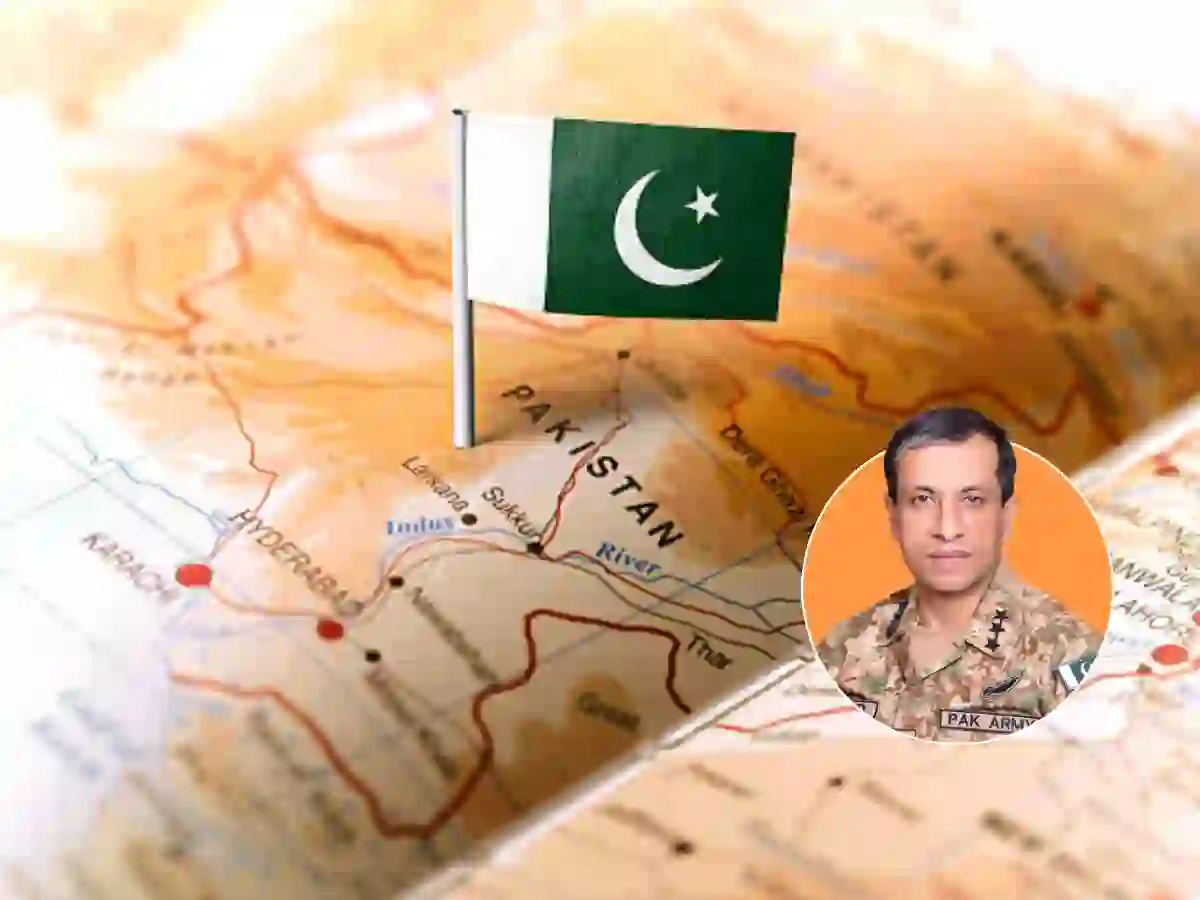
Director General of Inter-Services Public Relations (DG ISPR) Lieutenant General Ahmed Sharif Chaudhry on Friday called for a national discussion on administrative reforms, saying improved governance was essential for Pakistan’s security and stability, stressing that any reforms must be carried out through constitutional, legal and democratic processes.
Follow Times of Karachi on Google News and add as a preferred Source on Google
Addressing a press conference, the military spokesperson noted that Pakistan’s population had grown from around 65-70 million in 1972 to more than 250 million today, while the country still has four provinces.
He said it was necessary to assess whether the existing administrative structure was meeting the needs of a much larger population.
“Good governance is quintessential for Pakistan,” he said, adding that effective governance was closely linked to national security.
Responding to a question about Interior Minister Mohsin Naqvi’s recent remarks, Lt Gen Chaudhry said the minister’s comments reflected his personal opinion and that the military does not comment on such statements.
However, he reiterated that the armed forces have consistently maintained that good governance is vital for lasting peace and stability.
Referring to the National Action Plan (NAP), he said only one of its 14 points deals with kinetic operations against terrorism, while the remaining measures – including action against terror financing, smuggling and narcotics, strengthening counterterrorism institutions, improving the criminal justice system, repatriating Afghan refugees and reforming madrassas and education – depend on effective governance.
He said unresolved national issues required a serious discussion on governance, adding that any administrative changes should be decided by elected representatives in accordance with the Constitution and the will of the people.
Security operations across Pakistan
The DG ISPR said security forces conducted 40,348 operations across Pakistan during 2026, killing 2,084 terrorists.
According to him, 7,177 operations were carried out in Khyber Pakhtunkhwa, 31,080 in Balochistan and 2,091 in other parts of the country.
He said 3,145 terrorist attacks were recorded during the year, including 1,971 in Khyber Pakhtunkhwa, 1,148 in Balochistan and 26 elsewhere. He added that security forces conducted an average of 194 intelligence-based operations (IBOs) every day.
Lt Gen Chaudhry said 819 people were martyred during the year, including 303 Pakistan Army personnel, 194 members of law enforcement agencies and 322 civilians.
“Hard state”
The military spokesperson said Pakistan was “unfortunately not a hard state,” explaining that a hard state was one where the Constitution and laws were applied equally without elitism.
He rejected the perception that a hard state meant military rule, saying it instead referred to a system where all institutions and citizens operated within the constitutional and legal framework.
Rights and responsibilities
Speaking on citizens’ rights and obligations, Lt Gen Chaudhry said genuine grievances should be acknowledged but argued that constitutional responsibilities come before demands for rights.
Citing Article 5 of the Constitution, he said every citizen’s foremost duty was loyalty to the state and obedience to the Constitution and the law. He also said every citizen’s primary identity should be that of a Pakistani rather than an ethnic identity.
Remarks on Balochistan
The DG ISPR described the “elitism and sardari system” as a major obstacle to Balochistan’s development, claiming it had long prevented poor communities from accessing education and opportunities.
He clarified that he was not referring to all tribal chiefs but alleged that some sardars were among the principal drivers of terrorism because they feared losing their traditional influence as the province changed.
According to Lt Gen Chaudhry, these individuals sought to preserve the status quo by resisting reforms and using violence to pressure the state into negotiations. He said the state would engage directly with the people of Balochistan instead of negotiating with such elements.
Follow the Times of Karachi channel on WhatsApp
He further alleged that some influential figures wanted to retain control over the Levies Force for personal purposes, benefit from illegal trade, including narcotics and fuel smuggling, and secure a share of public funds.
India, Afghanistan and propaganda
The DG ISPR alleged that some of the sardars were receiving support from India and Afghanistan, claiming terrorism was the common factor linking both countries’ actions against Pakistan.
He also alleged that anti-state propaganda on Balochistan centred on four themes—deprivation, lack of representation, terrorism and missing persons—and claimed India was promoting these narratives through fake websites and social media accounts.
According to Lt Gen Chaudhry, more than 300 fake websites and over 1,000 social media accounts were being used to spread misinformation and amplify anti-Pakistan narratives related to Balochistan.
He added that security forces would continue counterterrorism operations in the province and said militant groups, including what he referred to as “Fitna al-Hindustan,” were being targeted.