




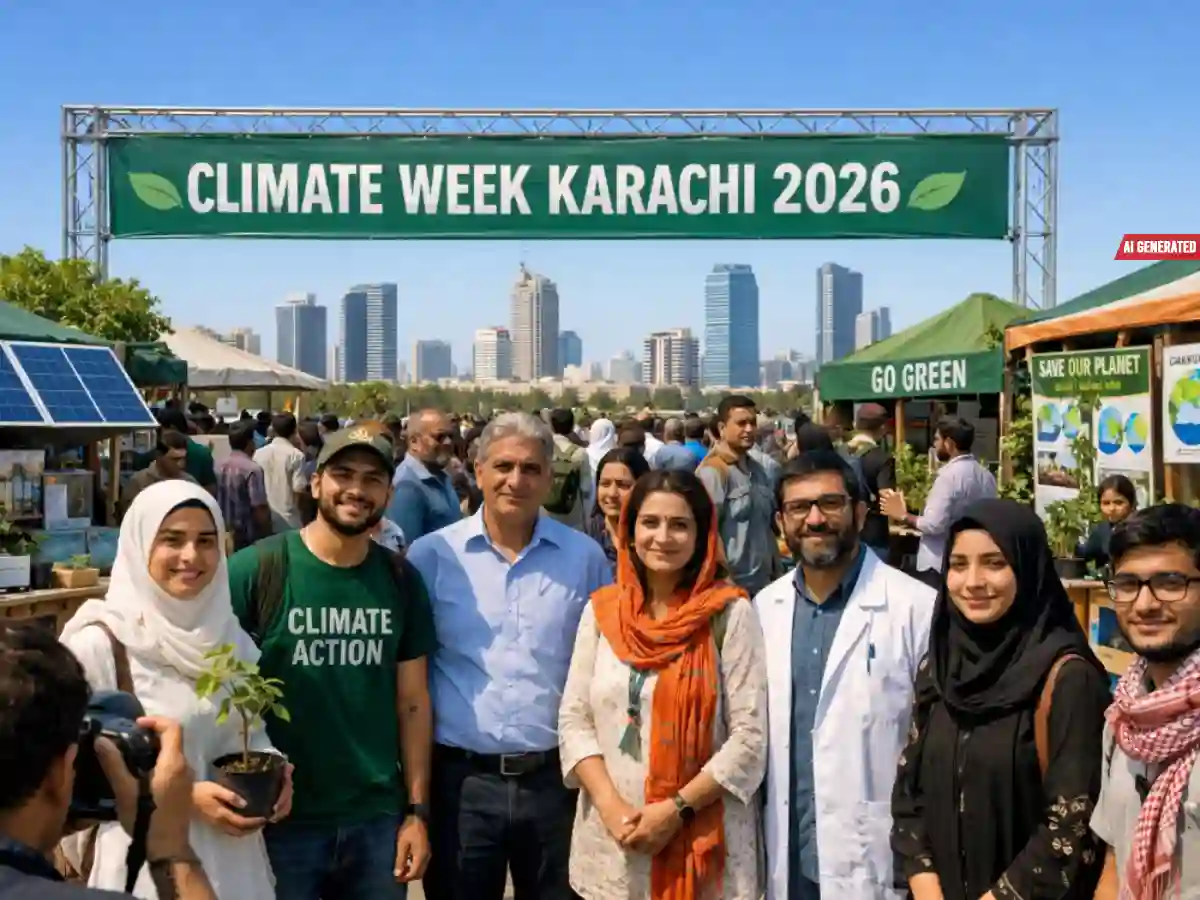
Climate Week Karachi 2026 has begun as Pakistan’s first-ever citywide climate week, marking a historic step in the country’s environmental journey.
Organised by the Climate Action Centre Karachi (CAC), the event will run from January 29 to February 4, 2026, and aims to bring climate awareness into Karachi’s cultural, academic, civic, and public spaces.
With the theme “Tides of Tomorrow: City, Memory, Future,” Climate Week Karachi places the River Indus at the centre of discussions on climate change, urban survival, energy transition, and climate justice.
The Indus River, stretching from the glaciers of the north to the Arabian Sea, is not only Pakistan’s lifeline but also a symbol of its history, culture, and ecological identity.
Visit Times of Karachi website for the latest news-related content
Karachi, located at the delta of the Indus, faces serious environmental challenges linked to climate change and upstream exploitation.
Rising sea levels, salinity intrusion, water shortages, coastal erosion, heatwaves, and energy insecurity are among the major threats affecting the city’s future.
Climate Week Karachi highlights how these crises are deeply connected to the health and survival of the Indus River.
Throughout the week, a wide range of stakeholders will participate in events and discussions, including artists, climate activists, scientists, policymakers, students, historians, civil society groups, and government institutions.
Climate Week Karachi 2026 sessions lineup announced
Through exhibitions, workshops, screenings, dialogues, and performances, the initiative aims to create a shared understanding of Karachi’s climate challenges and possible solutions.
A major focus of Climate Week Karachi 2026 is the city’s energy future. Dependence on fossil fuels has worsened environmental pollution and increased social and economic inequalities.
The event promotes energy justice and calls for a rapid shift toward renewable and clean energy systems.
Solar power is highlighted as a key solution for Karachi, offering affordable and decentralised electricity.
Electric mobility, including e-bikes, electric rickshaws, and electric vehicles, is also presented as a practical way to reduce emissions and improve air quality in urban areas.
Follow the Times of Karachi channel on WhatsApp
Climate Week Karachi emphasises that the energy transition is not only a technological change but also a social and cultural transformation.
By linking renewable energy, climate justice, and the River Indus, the initiative encourages citizens to rethink Karachi’s future and their role in building a climate-resilient city.
By positioning Karachi as a centre of imagination and collective action rather than a passive victim of climate change, Climate Week Karachi 2026 aims to inspire long-term environmental awareness and sustainable urban development across Pakistan.
To stay informed about current Karachi Air Quality, visit TOK Weather Page