





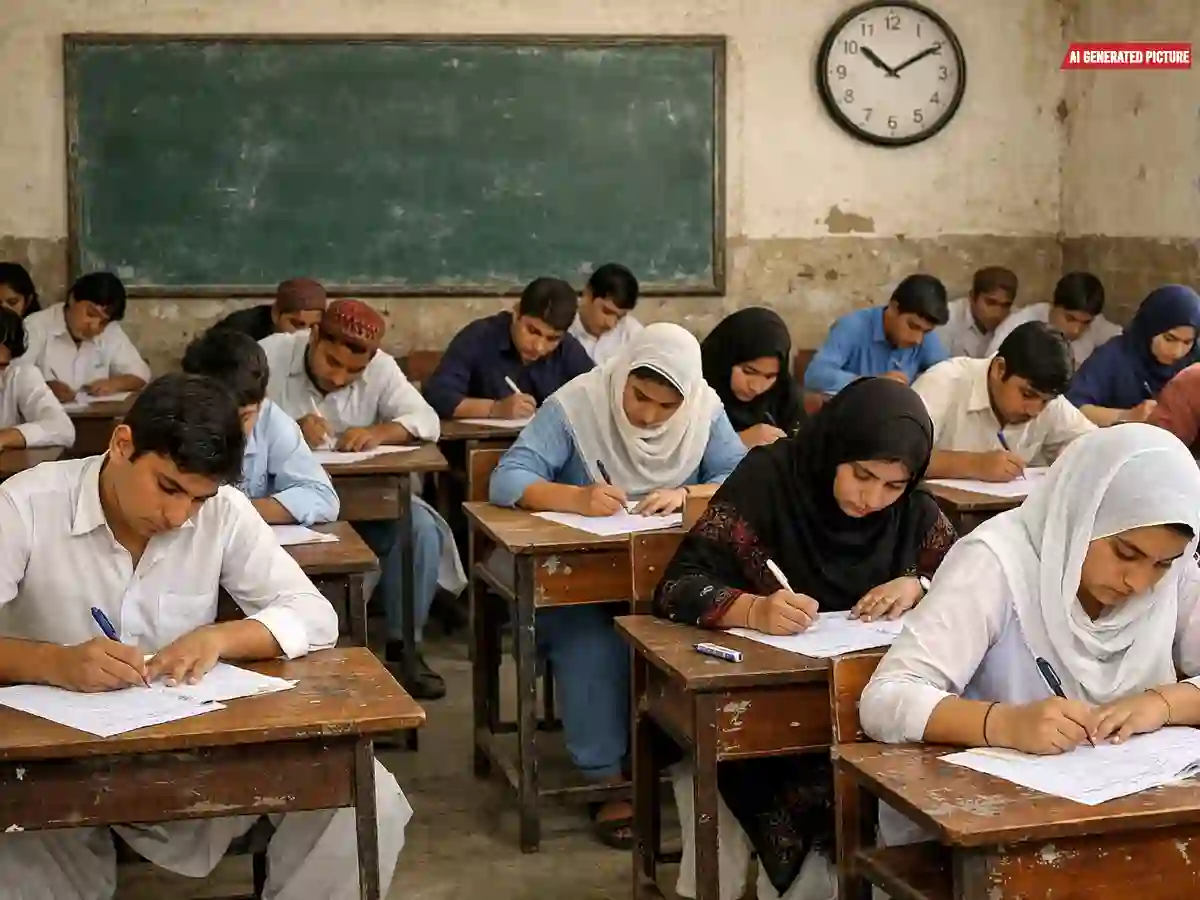
The Sindh government has announced a major change in the way students will be evaluated, replacing the traditional marks-based system with a new grading system for matric and intermediate exams.
Sindh Minister for Universities and Boards, Ismail Rahoo, said the new framework will follow international standards and will ensure a fairer and more transparent assessment of students’ performance.
Visit Times of Karachi website for the latest news-related content
Under this system, students scoring less than 40 percent will be considered failed.
“The provincial government has decided to modernize the examination system in line with global practices to provide a fair evaluation of students’ abilities,” Rahoo added.
The new grading system will be introduced gradually.
It will first be applied to Class 9 and Class 11 annual exams starting in 2026.
READ: Sindh launches e-transfer system to digitise teachers’ transfer process
In 2027, it will be extended to Class 10 and Class 12 examinations.
Instead of numerical marks, students’ results will now be shown in grades.
The approved grading scale is as follows:
- A++: 96% to 100%
- A+: 91% to 95%
- A: 86% to 90%
- B++: 81% to 85%
- B+: 76% to 80%
- B: 71% to 75%
- C+: 61% to 70%
- C: 51% to 60%
- D (Emerging): 40% to 50%
Students who score below 40 percent will be declared unsuccessful.
Follow the Times of Karachi channel on WhatsApp
Rahoo highlighted that the reform is part of a broader effort to improve educational standards in Sindh and bring the province’s assessment system in line with international practices.