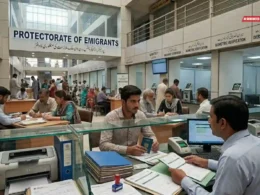





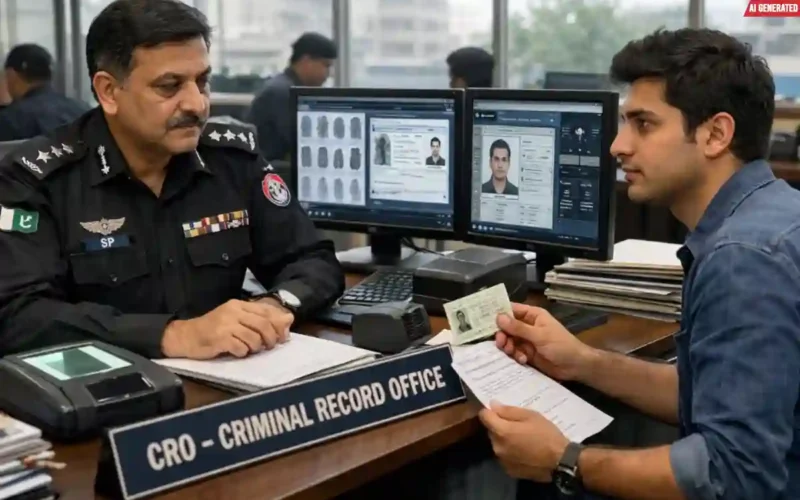
If you are planning to apply for a government job or travel abroad, understanding your Criminal Record Office (CRO) status is essential. Many applicants face delays or rejection simply because their CRO record is outdated or not properly updated.
In an interview with Times of Karachi correspondent Shujaat Qureshi, Dharmendra Roopchand, In-charge CRO at the Sindh Police Crime Branch, explained the importance of CRO and the process to update it.
What is a CRO?
A CRO (Criminal Record Office record) is created when a person is named in an FIR or involved in a criminal case. It includes identification details such as photographs, fingerprints, CNIC, address, and case information.
“CRO has been in place since the beginning of FIR registration. Earlier, it was maintained manually with photographs and fingerprints, but now the entire system is digital and connected across all police stations,” said Roopchand.
Visit Times of Karachi website for the latest news-related content
He explained that modern CRO records are created through biometric verification and digital data entry, making the system more efficient and accessible across districts.
Why CRO matters for jobs and visas
Roopchand emphasized that an outdated CRO can create serious hurdles for citizens.
“If you are applying for a government job or need to travel abroad, and your CRO is not updated, you will not get clearance,” he said.
This includes delays in obtaining character certificates, which are often required for employment and visa processing.
Can CRO can be deleted?
Clarifying a common misconception, Roopchand stated:
“CRO is not terminated, it is updated.”
He explained that:
- If a person is acquitted, the record is updated accordingly
- If a person is convicted, the conviction remains on record
“There is no way to erase a CRO, but it can and must be updated based on the case outcome,” he added.
When and how to update your CRO
According to Roopchand, citizens should act promptly after their case is decided.
“If someone is acquitted, they should submit an application to the DIG Crime and Investigation along with their CNIC copy and court judgment,” he explained.
The process involves:
- Submission of application
- Verification by the relevant SSP office
- Final update through the IT department
Karachi: 3,467 Motorcycles, 157 Cars, 1,265 Phones Stolen in March 2026
Once verified, the updated status is reflected in the system.
Timeline and cost
Roopchand clarified that the process is straightforward and free:
“It usually takes 7 to 10 days, and there is no fee at all. This process is completely free.”
He also warned citizens against agents demanding money:
“If anyone asks for money to update CRO, do not pay them. Approach us directly.”
What happens if you don’t update your CRO?
Roopchand warned that failing to update your record can lead to complications:
“If your CRO is not updated, you can face problems anywhere.”
This includes difficulties in employment, immigration, and background verification.
Important note for applicants
Even individuals who are granted bail or not formally arrested may still need to complete CRO procedures after investigation.
Follow the Times of Karachi channel on WhatsApp
Roopchand stressed that updating the CRO is essential to reflect your correct legal status and avoid future issues.
The CRO system plays a crucial role in law enforcement and background verification. As highlighted by Dharmendra Roopchand, keeping your record updated is vital—especially before applying for government jobs or visas.
Failing to do so can result in unnecessary delays and complications, even if you have been cleared by the court.